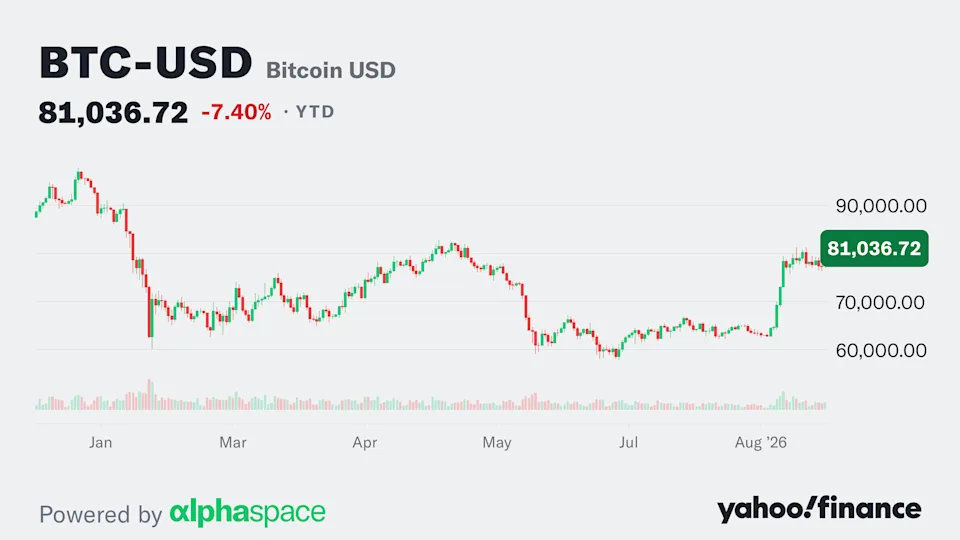
Bitcoin climbed back above $80,000 Thursday, extending a sharp late-summer recovery as falling Treasury yields and reduced expectations for another Federal Reserve rate increase pushed investors back toward cryptocurrencies and other risk-sensitive assets.
The world’s largest cryptocurrency rose roughly 4% during the session and traded around $81,000 in afternoon trading after briefly reaching its highest intraday level since mid-May. The move followed an overnight dip toward $77,000 and built on a powerful August rally that lifted Bitcoin approximately 25% for the month.
Bitcoin remains below its 2026 high near $97,900 and is still down roughly 7% for the year, so Thursday’s move does not by itself confirm that a new bull market has begun. It does, however, strengthen the argument that the severe weakness seen earlier in 2026 may be losing momentum.
Noelle Acheson, author of Crypto Is Macro Now, told Yahoo Finance that recent price action suggests the “crypto winter is close to being over.” That is an outlook rather than a confirmed market turning point, and other strategists remain more cautious about declaring the downturn finished after only several weeks of improving prices.
For investors, the more immediate question is whether Bitcoin can hold above $80,000 as markets approach the Federal Reserve’s September meeting and one of cryptocurrency’s historically more difficult months.
Fed Expectations Help Push Bitcoin Higher
Thursday’s rally accelerated after Federal Reserve Governor Christopher Waller indicated that he could support keeping interest rates unchanged at the Fed’s September 15-16 meeting if incoming inflation data show that recent improvement is continuing.
Waller said inflation remains meaningfully above the Fed’s 2% target, but recent readings have shown signs of disinflation. He added that he would consider another rate increase if August inflation shows that the improvement was temporary.
His comments caused investors to reduce bets on a September rate increase and helped push Treasury yields lower. The 10-year Treasury yield fell toward 4.76% after recently reaching some of its highest levels of the year.
Bitcoin tends to respond strongly to changes in financial conditions because it does not generate earnings or interest payments. When bond yields rise, investors can earn higher returns from lower-risk assets such as Treasuries, making speculative assets comparatively less attractive. Falling yields can reverse some of that pressure.
The same dynamic helped stocks rally Thursday. The Dow Jones Industrial Average, S&P 500 and Nasdaq Composite each gained more than 1% as Waller’s comments reduced concerns that the Fed would resume tightening monetary policy later this month.
That relationship has become increasingly important for Bitcoin. The cryptocurrency has traded less like an isolated alternative asset during major macroeconomic moves and more like a high-volatility financial asset sensitive to liquidity, interest rates, the dollar and investor risk appetite.
August Rally Changed the Crypto Picture
Bitcoin’s return above $80,000 follows one of its strongest months in nearly two years.
The token gained roughly 25% in August, its best monthly performance since November 2024. The rally accelerated after the U.S. Treasury expanded repurchases of longer-dated government bonds, helping ease pressure in the Treasury market and weakening the dollar.
Those moves encouraged investors to increase exposure to assets including gold and Bitcoin as concerns surrounding government borrowing and currency purchasing power fed what market participants have called the “debasement trade.”
Bitcoin had been trading below $65,000 earlier in the summer before the late-August advance pushed it back through several closely watched technical levels.
The recovery has now brought Bitcoin near an important resistance area. Reuters technical analysis identified the May high near $82,793 as one of the next significant hurdles. A sustained move above that zone could put the $90,000 area back into focus, while a drop below recent support around the mid-$70,000 range would weaken the recovery. Those levels reflect technical analysis rather than guaranteed price outcomes.
Bitcoin’s 2026 peak remains much higher, near $97,867.
The gap between current prices and that high shows why describing the current move as the beginning of a new bull market remains premature. Bitcoin has recovered significantly, but it has not yet erased its losses for the year or returned to its previous highs.
ETF Demand Returns After Difficult Start to 2026
Institutional demand has also improved.
U.S.-listed spot Bitcoin exchange-traded funds attracted approximately $3.5 billion of net inflows during August, their strongest month of 2026. Sixteen of the month’s 21 trading sessions recorded net inflows.
The improvement represented a sharp reversal from earlier in the year, when investors had been pulling capital from Bitcoin funds.
Flows have remained volatile since September began.
The group recorded approximately $236.5 million of net outflows on September 1 before returning to roughly $101.1 million of net inflows on September 2, according to Farside Investors.
BlackRock’s iShares Bitcoin Trust accounted for about $115 million of Wednesday’s inflows, while Grayscale’s GBTC recorded approximately $56 million of withdrawals.
That makes ETF flows an important confirmation signal for the current rally.
A Bitcoin price increase supported by sustained ETF inflows would suggest institutional investors are adding exposure alongside short-term traders. A return to persistent fund withdrawals would make the breakout above $80,000 less convincing.
September Has Historically Been Difficult for Bitcoin
One risk facing the rally is the calendar itself.
Bitcoin has produced a negative September return in nine of the past 15 years, according to historical figures cited by Yahoo Finance.
Fundstrat head of digital assets Sean Farrell cautioned investors against relying too heavily on that seasonality, however, noting that Bitcoin has avoided a negative September for the past four years.
Seasonal patterns can influence positioning and sentiment, but they do not determine market outcomes.
Other historical measures show September has generally been Bitcoin’s weakest month since 2014, with an average decline of roughly 2.2%, according to Dow Jones Market Data.
This year’s macroeconomic backdrop is also unusual enough that historical averages may be less informative than Treasury yields, Fed policy and institutional flows.
The current Bitcoin rally has developed alongside major changes in bond markets, U.S. monetary-policy expectations and government intervention in Treasury markets. Those factors were not present in the same form during many previous Septembers.
Crypto Stocks Surge Alongside Bitcoin
The rally spread quickly into publicly traded companies tied to cryptocurrency markets.
Robinhood shares surged roughly 17% Thursday and finished just below $125, becoming the strongest performer in the S&P 500. The company has exposure to cryptocurrency trading, although recent analyst upgrades have also focused on its expanding businesses in prediction markets, banking and wealth management.
Coinbase jumped roughly 10% as rising crypto prices improved expectations for trading activity on the largest publicly traded U.S. cryptocurrency exchange.
Strategy, formerly MicroStrategy and one of the largest corporate holders of Bitcoin, also posted a double-digit gain during the session, while crypto miners and other digital-asset stocks moved higher.
Crypto-related equities often magnify Bitcoin’s moves because their revenue, asset values or investor sentiment can be directly affected by changes in cryptocurrency prices.
That also makes the stocks more vulnerable if Bitcoin’s rally reverses.
A rapid decline back below $80,000 could pressure Coinbase trading expectations, reduce the value of Strategy’s Bitcoin holdings and weaken sentiment toward other crypto-linked equities.
What Comes Next for Bitcoin
The Federal Reserve is likely to determine much of Bitcoin’s near-term direction.
Markets will receive additional employment and inflation data before the Fed’s September 15-16 meeting. Waller made clear that August inflation will play an important role in his decision.
If inflation continues cooling, expectations for the Fed to remain on hold could strengthen, potentially keeping pressure off Treasury yields and supporting risk assets.
A hotter-than-expected inflation report would create the opposite setup. Higher expectations for another Fed hike could push bond yields and the dollar higher while putting renewed pressure on Bitcoin.
David Grider, head of liquid investments at Finality Capital, told Yahoo Finance that he could see cryptocurrencies and equities rallying following the Fed meeting, potentially taking Bitcoin above its current level into late September or early October. That remains a market forecast, not a confirmed outcome.
The $82,000 to $83,000 area may provide the first significant test.
Bitcoin traded near $81,000 Thursday afternoon and has not sustained a breakout above the May peak near $82,800. Clearing that level would leave the cryptocurrency closer to challenging $90,000 and eventually its 2026 high.
Investors should also watch whether ETF flows remain positive, whether Treasury yields continue easing and whether gains spread beyond Bitcoin into the broader cryptocurrency market.
For now, Bitcoin has recovered from below $60,000 earlier this year, gained roughly 25% in August and reclaimed $80,000 as monetary-policy fears eased.
Whether that marks the end of the crypto winter will depend less on Thursday’s headline price and more on whether Bitcoin can hold those gains through September, attract continued institutional capital and survive the next round of inflation data and Federal Reserve policy decisions.