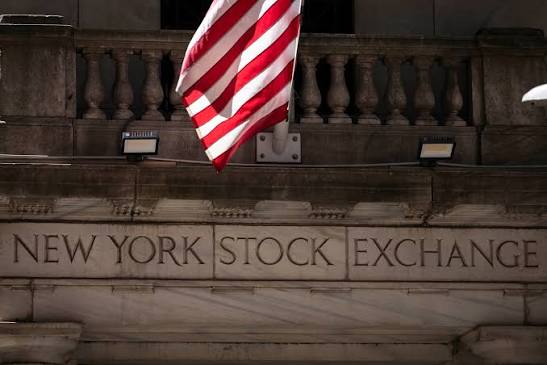
Wall Street finished lower Monday as a sharp selloff in artificial-intelligence stocks collided with another rise in oil prices and a brief move above 5% for the 10-year Treasury yield. The broader market held up considerably better than the technology sector, however, with more S&P 500 stocks advancing than declining.
The S&P 500 fell 0.48% to 7,619.98, the Nasdaq Composite lost 0.56% to 26,186.41 and the Dow Jones Industrial Average declined 0.29% to 52,421.20. The Nasdaq had been down as much as 1.3% earlier in the session before recovering much of the loss.
The biggest pressure came from semiconductor stocks after several prominent AI executives raised concerns about the pace of development and supported giving safety measures more time to catch up.
Nvidia dropped 3.4%, Micron fell more than 5%, and Broadcom and Advanced Micro Devices each declined more than 4%. The Philadelphia Semiconductor Index sank 5.9%, although it remains up roughly 57% for the year.
The reaction showed how sensitive the market has become to anything that could threaten the pace of AI investment. Chipmakers and infrastructure suppliers have benefited from hundreds of billions of dollars flowing into data centers and model development, leaving their valuations tied closely to expectations that spending will continue expanding.
Anthropic CEO Dario Amodei called for a deliberate slowdown in advanced AI development, citing safety concerns. OpenAI CEO Sam Altman and xAI’s Elon Musk also expressed support for greater caution. The comments do not represent a formal industry-wide pause, and there is no evidence yet that major technology companies have broadly reduced their capital-spending plans.
That distinction helped prevent the selloff from spreading across the entire market.
Software Stocks Move the Other Way
Some companies that had recently been punished over fears that AI could disrupt their businesses rallied sharply.
Autodesk rose 7.8%, Intuit gained 5.5% and Adobe climbed 5.3%. Reuters also reported gains of roughly 4% to 7.4% across ServiceNow, Adobe and Workday.
The reversal reflects a different side of the same AI debate.
Software stocks have faced pressure as investors considered whether increasingly capable AI systems could reduce demand for traditional software products or squeeze margins. A slower development cycle could give established software companies more time to integrate AI into their products without facing the same pace of competitive disruption.
Monday therefore looked less like a broad rejection of technology and more like a rotation within it.
Advancing stocks outnumbered decliners in the S&P 500 by roughly 1.3 to one, even as the index finished lower. Information technology was the weakest major sector, falling 1.68%.
Oil and a 5% Treasury Yield Add Pressure
AI was not the market’s only concern.
Brent crude settled 1% higher at $105.68 a barrel after approaching $110 earlier Monday. Prices have climbed from below $72 in early July as the conflict involving Iran has disrupted oil shipping and increased concerns about global supply. An attack on Saudi Arabia’s East-West Pipeline has added another risk to flows that can bypass the Strait of Hormuz.
Higher energy prices are feeding directly into the inflation outlook just as the Federal Reserve prepares to announce its next interest-rate decision Wednesday.
The 10-year Treasury yield briefly crossed 5% for the first time since 2023 before easing to about 4.98% as oil retreated from its morning high. The yield had ended Friday near 4.96% and was below 4% before the Iran conflict began in February.
Markets are now assigning roughly a 90% probability that the Fed raises rates by 25 basis points this week. August consumer inflation and the recent oil surge have pushed both economists and traders toward expecting tighter policy.
A 5% 10-year yield presents a different challenge for stocks than an isolated technology selloff. It raises borrowing costs throughout the economy and gives investors a higher-returning alternative to equities, making elevated valuations more difficult to justify when earnings disappoint.
Monday’s trading showed both pressures operating simultaneously: AI leaders were repriced on concerns about future development, while the rest of the market absorbed another increase in rates and energy costs without a much larger selloff.
Bank of America was one notable weakness outside technology, dropping 5.1% after CEO Brian Moynihan said third-quarter investment-banking fees could fall by at least 10%.
The next market test arrives Wednesday.
A quarter-point Fed increase is largely reflected in current pricing, making Chair Kevin Warsh’s comments and the central bank’s updated rate projections potentially more important than the hike itself. If policymakers signal that high oil prices and persistent inflation require several additional increases, Treasury yields could remain a larger obstacle for equities than Monday’s AI selloff.
If rates stabilize and AI companies continue with their existing spending plans, Monday’s decline may look more like a concentrated repricing of semiconductor stocks than the beginning of a broader retreat from the market.