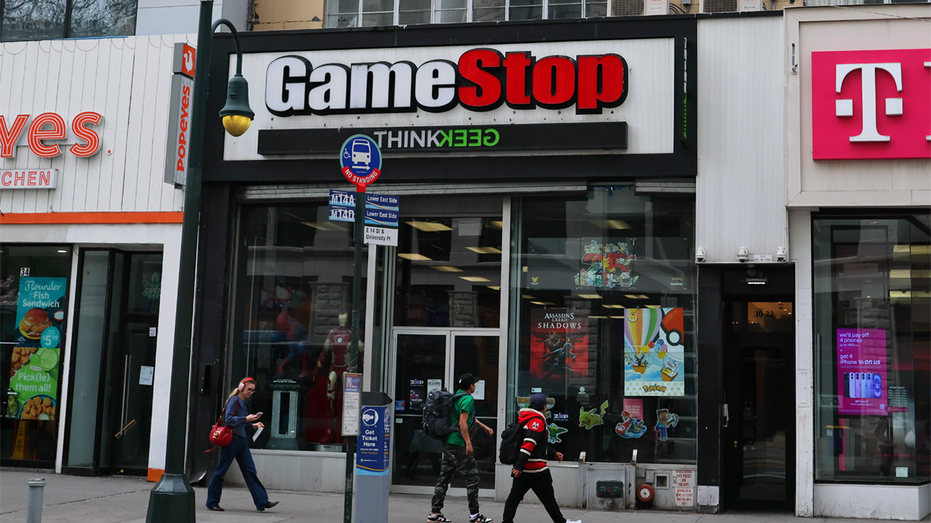
GameStop Chairman and Chief Executive Ryan Cohen spent another $20.4 million of his own money buying company shares, adding to his exposure just as the retailer shifts more heavily toward collectibles and investment assets while issuing significant amounts of new equity.
Cohen purchased 1 million GameStop shares in the open market on September 10 at a weighted average price of $20.3759, according to an amended Schedule 13D. The transactions ranged from $20.0199 to $20.4699 a share.
The purchase increased his direct ownership to 39.35 million shares.
Cohen also holds 3.73 million GameStop warrants, bringing his reported beneficial ownership to 43.08 million shares, or approximately 8.5% of the company under SEC ownership rules. Those warrants carry a $32 exercise price and expire October 30, meaning they remain well out of the money with GameStop trading near $21.
The stock initially responded positively. GameStop gained roughly 2.8% Friday after the purchase became public and closed Monday at $21.62. Shares were back around $21.30 Tuesday afternoon, down roughly 1.5% during a weaker broader market.
The muted response suggests investors are treating Cohen’s purchase as a confidence signal rather than a fundamental change in GameStop’s value.
His Ownership Is Growing in Shares but Shrinking in Percentage Terms
Cohen now owns more GameStop stock than he did at the beginning of the year, but his percentage stake has moved in the opposite direction.
In January, after purchasing 500,000 shares at an average $21.601 apiece, Cohen reported beneficial ownership of 42.08 million shares, including warrants, equal to approximately 9.3% of the company. At the time, GameStop had about 448 million shares outstanding.
His latest filing shows beneficial ownership of 43.08 million shares but only an 8.5% stake.
The difference comes primarily from GameStop’s expanding share count.
The company had 504.5 million shares outstanding as of September 3, roughly 56.5 million more than the figure used in Cohen’s January filing. Much of that increase came from GameStop’s recent exchange of convertible debt for equity.
GameStop agreed to issue approximately 55.5 million shares, along with $358.4 million in cash, to retire about $1.4 billion of its 0% convertible senior notes. The transaction reduced debt without requiring GameStop to repay the entire amount in cash, but existing shareholders absorbed the dilution created by the new stock.
Cohen’s latest purchase therefore restores only a small portion of the ownership percentage lost through that issuance.
That distinction matters because an executive buying stock can align management more closely with shareholders, but the economic effect has to be considered alongside the company’s own issuance of shares.
Cohen has been unusually explicit about that alignment. After his January purchase, he wrote in his Schedule 13D that public-company CEOs should buy shares with personal funds and said executives who fail to do so should be removed.
GameStop’s Business Is Becoming Less About Video Games
The timing of Cohen’s purchase follows one of GameStop’s strongest profit quarters even though revenue continued falling.
Second-quarter sales declined 18.7% to $790.2 million from $972.2 million a year earlier, partly because the prior-year period included the launch of Nintendo’s Switch 2, while GameStop has also closed stores and exited its French business.
Operating income, however, increased to $160.2 million from $66.4 million, the highest second-quarter operating profit in company history.
Collectibles have become the most important change in the underlying retail business.
Sales in the category jumped 57% to $356.3 million and represented 45.1% of GameStop’s quarterly revenue. The company also raised its fiscal 2026 adjusted EBITDA forecast to more than $650 million.
Those results show a company generating substantially more profit from a smaller revenue base as management closes weaker stores, cuts expenses and shifts merchandise toward higher-performing categories.
Yet GameStop’s investment portfolio has become almost as important to the financial story as its stores.
The company ended the quarter with about $5.4 billion in cash, marketable securities, digital assets and related receivables, plus an eBay equity position valued at roughly $4.9 billion.
GameStop’s second-quarter net income of $298.7 million included approximately $238 million of gains associated with its eBay derivative and equity positions, partially offset by a roughly $75 million loss tied to digital assets and related receivables.
That makes current earnings unusually sensitive to investment performance as well as retail operations.
The Insider Buying Extends Beyond Cohen
Cohen was not the only GameStop insider buying after the earnings report.
Directors Lawrence Cheng, James Grube and Alain Attal purchased a combined 70,255 shares worth roughly $1.3 million around the same period. Cohen’s $20.4 million purchase was by far the largest.
Multiple insiders purchasing shares can reinforce the message that management and directors believe the stock offers attractive value at current prices.
It does not eliminate the larger questions surrounding GameStop.
Revenue continues to decline, the legacy video-game retail market faces long-term pressure from digital distribution, the company has significantly increased its share count, and billions of dollars of shareholder capital are now tied to external investments including eBay and digital assets.
Cohen’s latest purchase increases his direct financial exposure to all of those decisions.
At approximately $20.38 per share, he bought below his January purchase price of $21.60 and well below the $32 strike price required to exercise his remaining warrants.
The next meaningful test will not be another insider filing. It will be whether GameStop’s improving operating profitability and collectibles growth can continue while management converts its unusually large balance sheet into returns that outweigh the dilution created while building it.