Canada and India are pressing to complete a comprehensive trade agreement before the end of 2026, with energy, critical minerals and investment emerging as some of the most financially significant pieces of a relationship both governments want to more than double by the end of the decade.
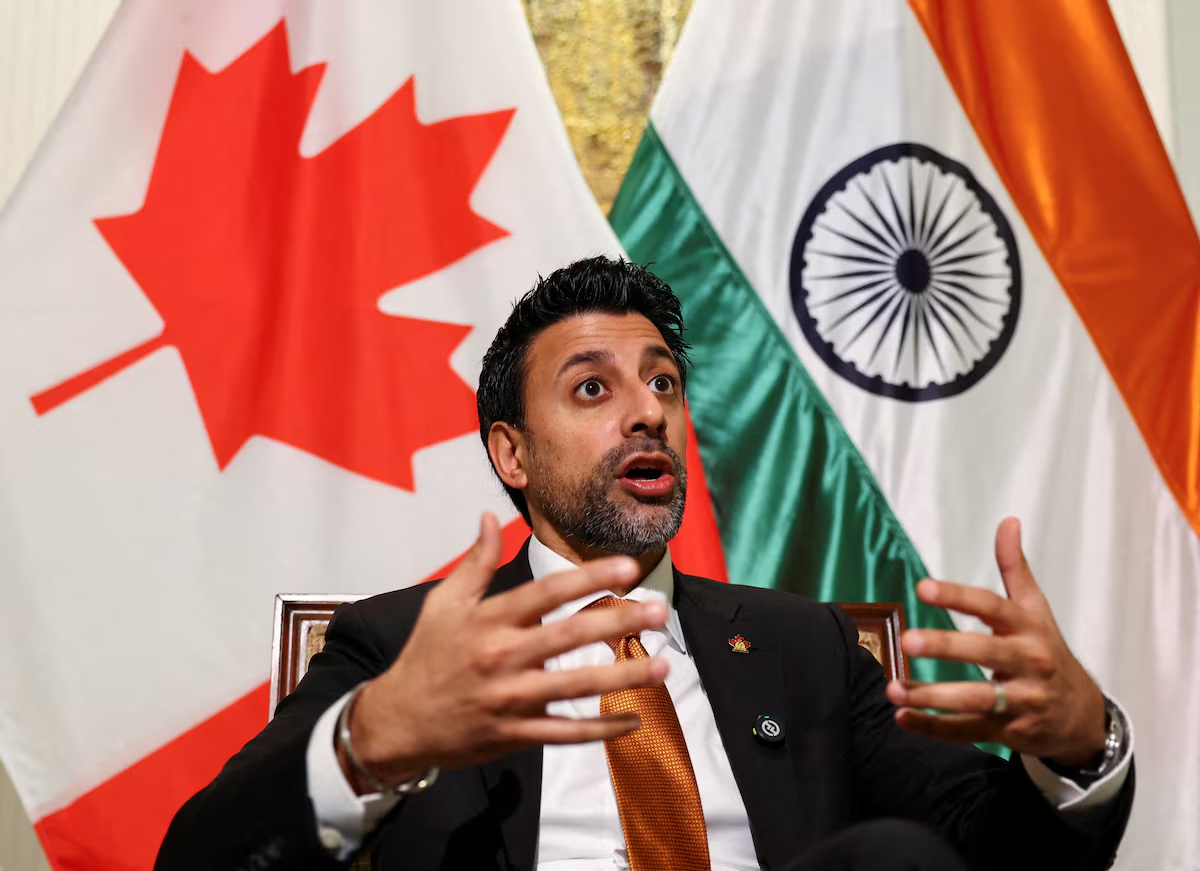
Canadian International Trade Minister Maninder Sidhu said Saturday that he remains optimistic a Comprehensive Economic Partnership Agreement can be completed within the next several months.
Three negotiating rounds have already been completed, and a fourth is underway. Indian negotiators are expected to travel to Canada in October, while Canadian Prime Minister Mark Carney and Indian Prime Minister Narendra Modi could meet again around the G20 summit in December.
Both governments have committed publicly to finishing negotiations by year-end and are targeting C$70 billion in annual two-way trade by 2030.
That would require a substantial acceleration.
Canada and India exchanged C$30.4 billion of goods and services in 2025, including C$13.6 billion of merchandise trade.
The opportunity is large, but the existing trade relationship is uneven.
Canadian merchandise exports to India fell 27% last year to C$3.9 billion, with lower shipments of agricultural products and energy contributing to the decline. Imports from India rose 20.6% to C$9.7 billion, led by products including precious stones, machinery and pharmaceuticals.
Services tell a different story.
Canada exported C$15.2 billion of services to India in 2025, with education-related travel accounting for the largest portion. India became Canada’s second-largest services export market after the United States, representing about 6% of Canadian services exports.
Reaching C$70 billion will therefore require considerably more than preserving the existing flow of students, professional services and manufactured imports.
Energy is becoming one of the clearest areas where the numbers could move quickly.
LNG Creates a New Route Into India
Canada only became a major liquefied-natural-gas exporter last year.
The Shell-led LNG Canada facility in Kitimat, British Columbia, shipped its first cargo in June 2025 and has capacity to produce 14 million tonnes of LNG annually.
Its location on Canada’s Pacific coast gives it direct access to Asian markets without requiring cargoes to travel from the U.S. Gulf Coast.
A potential second phase could double capacity to 28 million tonnes annually, although the expansion still requires a final investment decision.
Sidhu said Canadian officials are discussing both LNG purchases and investment opportunities with Indian companies.
That could take several forms.
Indian buyers could sign long-term supply arrangements, invest directly in Canadian LNG projects or combine equity investment with guaranteed future supply.
No specific new LNG agreement was announced Saturday, and Sidhu did not identify companies or disclose commercial terms.
That makes the discussions potentially significant but still preliminary.
India is one of the world’s largest and fastest-growing energy markets, while Canada is trying to reduce the concentration of its exports in the United States.
Canadian merchandise exports to the U.S. fell 5.3% in 2025, while exports to non-U.S. markets increased sharply in several regions. The U.S. still accounted for roughly 72% of Canadian goods exports.
A deeper energy relationship with India would therefore serve two economic goals at once: expanding access to a growing Asian consumer and reducing Canada’s dependence on a single export market.
Nuclear Trade Is Already Moving From Talks to Contracts
Nuclear energy provides a more concrete example.
During Carney’s March visit to India, the two countries announced a C$2.6 billion agreement under which Saskatoon-based Cameco will supply nearly 22 million pounds of uranium to India between 2027 and 2035.
The governments also launched a broader Strategic Energy Partnership covering LNG, LPG, uranium, hydrogen, solar power and other energy technologies.
India is seeking to increase nuclear generating capacity substantially as electricity demand rises.
Canada has uranium reserves, an established nuclear supply chain and decades of experience with CANDU reactor technology.
Sidhu said Saturday that Canadian companies could participate more deeply in the expansion of India’s nuclear sector, particularly through supply-chain development.
Unlike a conventional tariff cut, that opportunity could create multi-year contracts involving fuel, equipment, engineering and related services.
Critical Minerals Could Bring Indian Capital Into Canada
Investment may ultimately matter as much as exports.
Sidhu said major Indian industrial groups, including Reliance Industries, Mahindra & Mahindra and JSW Group, are examining potential investments in Canadian critical-mineral projects.
No transactions were announced, and the companies have not publicly committed capital to specific projects as part of the current negotiations.
The discussions nevertheless align with agreements the two governments signed earlier this year to deepen cooperation in critical minerals and strengthen supply chains.
For India, the attraction is access to materials needed for manufacturing, energy infrastructure and advanced technologies.
For Canadian mining projects, strategic investors can bring both financing and a future customer.
Many critical-mineral developments require billions of dollars and years of construction before generating revenue. Long-term buyers or equity partners can make financing easier by giving lenders greater confidence that future production has a market.
That is why investment rules inside the eventual CEPA could matter almost as much as tariffs.
The Trade Deal Still Has to Convert Targets Into Market Access
The negotiations resumed with unusually ambitious targets.
Carney and Modi formally launched the latest CEPA process in March and agreed to aim for completion by the end of 2026. The countries have since held repeated ministerial and official meetings, including an inaugural finance ministers’ dialogue in August.
But a political deadline is not the same as a completed trade agreement.
Negotiators still have to resolve market-access rules across goods, services and investment, along with the regulatory and administrative provisions that determine whether companies can actually use the agreement.
Those details will determine whether the pact meaningfully changes trade flows.
Canada’s recent numbers demonstrate the challenge.
Despite India being one of the world’s fastest-growing major economies, Canadian goods exports there fell by more than C$1 billion last year.
Simply reaching the government’s C$70 billion target would require more than doubling current bilateral trade within roughly four years.
Energy projects could do a meaningful share of that work because individual LNG, uranium or critical-mineral agreements can be worth billions of dollars.
The next important checkpoint comes in October, when Indian negotiators are expected in Canada.
If the two sides can resolve the remaining commercial issues before the expected Carney-Modi meeting around December’s G20 summit, the year-end target remains plausible.
The more consequential test would come afterward: whether Canadian LNG, uranium and minerals actually begin moving to India in enough volume—and whether Indian capital begins moving into Canadian projects—to turn a diplomatic trade target into tens of billions of dollars of additional business.