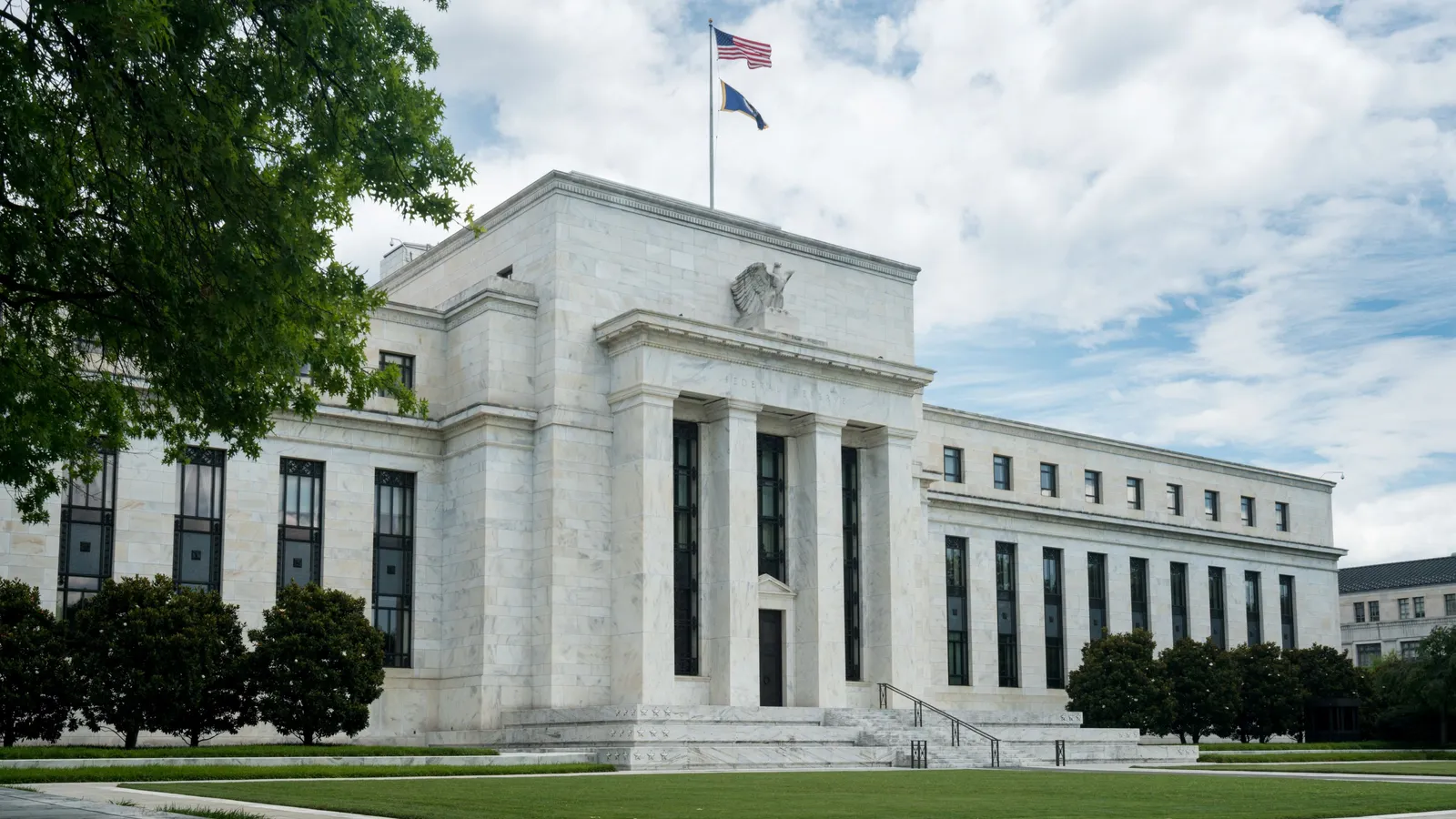
The U.S. economy continued expanding during the second half of the summer, but the Federal Reserve is seeing an increasingly complicated mix of modest growth, cautious consumers and persistent inflation as policymakers prepare for another important interest-rate decision.
Economic activity increased modestly across the country from early July through late August, according to the Federal Reserve’s latest Beige Book, a collection of reports from businesses, financial institutions and other contacts throughout the central bank’s 12 regional districts.
Ten of the 12 Federal Reserve districts reported economic growth ranging from slight to moderate.
Two districts reported essentially no change.
The economy therefore continues expanding rather than contracting, but the pace of growth remains restrained and uneven.
Consumer behavior has become one of the clearest examples of that tension.
Overall consumer spending increased only slightly.
Households have become increasingly sensitive to prices after years of elevated inflation, limiting how much businesses can increase prices without losing customers.
At the same time, spending among wealthier households remained relatively strong.
The result is an economy in which higher-income consumers continue supporting portions of retail and services activity while other households become more selective about purchases.
The Federal Reserve found that some customer-facing businesses were unable to fully pass their rising costs to consumers because shoppers were increasingly resistant to higher prices.
That creates another problem for companies.
Businesses may pay more for materials, energy, transportation, insurance and labor while having limited ability to raise their own prices enough to protect profit margins.
Automobile sales were particularly weak.
The Fed attributed subdued vehicle demand to a combination of low consumer confidence, expensive fuel and rising financing costs.
Higher interest rates increase the monthly payment required to finance vehicles, making already-expensive new and used cars harder for many consumers to afford.
The recent rise in energy prices adds another obstacle.
Higher gasoline costs reduce the amount households have available for other purchases while simultaneously increasing operating expenses for many businesses.
Travel performed better.
Tourism activity increased during the reporting period.
Airlines reported strong customer demand even though ticket prices had risen.
That suggests consumers are continuing to prioritize some travel and experience-related spending despite becoming increasingly cautious about other discretionary purchases.
Manufacturing also showed greater strength than consumer spending.
Factory activity improved across most Federal Reserve districts.
Demand connected with defense spending and artificial intelligence infrastructure was particularly important.
Manufacturers in several regions reported strong orders tied to military goods and data-center development.
The AI infrastructure boom continues generating enormous amounts of investment as technology companies and other businesses build data centers, purchase servers and expand the physical infrastructure required to operate artificial intelligence systems.
Defense demand has provided another source of support.
That combination has allowed portions of manufacturing to expand even as consumer-oriented sectors remain much less consistent.
The Cleveland Fed district, for example, reported particularly strong manufacturing demand connected with data centers and defense spending while consumer spending declined for a fourth consecutive reporting period.
The New York district also reported particular strength in manufacturing, although businesses there were dealing with supply-chain pressure affecting technology and defense industries.
Services companies generally reported slight to modest increases in activity.
Financial conditions also improved somewhat.
Loan volumes remained solid or increased throughout most Fed districts.
That indicates businesses and households have continued borrowing despite relatively high interest rates.
However, financial conditions are not uniformly strong.
High borrowing costs remain an obstacle for rate-sensitive industries and consumers financing large purchases.
Housing offered one of the clearest examples.
Residential construction declined during the reporting period.
Higher mortgage rates, financing expenses and affordability problems continue weighing on homebuilding and housing activity.
Nonresidential construction moved in the opposite direction.
Commercial and industrial construction increased on balance, with several regions reporting that a large share of new activity was associated with data centers.
That divergence highlights the unusual nature of the current economic expansion.
Traditional household-sensitive sectors such as residential real estate are experiencing pressure from high rates.
At the same time, AI-related capital investment continues producing enormous construction demand in other parts of the economy.
Agriculture remained another mixed area.
Overall conditions improved slightly but remained difficult.
Livestock producers generally experienced stronger conditions, while many crop farmers continued struggling.
Reuters reported that agricultural contacts also pointed to rising demand for protein, partly associated with changing eating habits among people using weight-loss drugs.
Some crop-producing regions continued dealing with drought, elevated costs and weak farm income.
The labor market was similarly stable but not particularly strong.
Employment increased only very slightly nationwide.
Three Federal Reserve districts reported modest employment growth.
Four reported slight growth.
Five reported no meaningful change.
Hiring demand remained strongest in manufacturing, construction and certain service industries.
Retail and hospitality businesses were more likely to report weakening labor demand.
Employers continued struggling to find certain types of workers.
Skilled tradespeople and employees with specialized technical abilities remained particularly difficult to recruit.
That shortage is also affecting wages.
Most Fed districts reported wage increases ranging from modest to moderate.
The largest pay increases were frequently associated with skilled positions in manufacturing and construction, where businesses are competing for a limited supply of qualified workers.
Companies also provided mixed assessments of how artificial intelligence is affecting employment.
Some reported that AI reduced the need for certain jobs or tasks.
Others said the technology was generating additional hiring requirements as businesses expanded AI-related infrastructure and services.
The labor market therefore remains relatively stable, but employers are not adding workers at the pace seen during stronger phases of the post-pandemic expansion.
Separate employment data released Wednesday reinforced that picture.
Private employers added only 38,000 jobs during August, according to ADP, below economists’ expectations.
Manufacturing and professional and business services lost jobs, while education, health services, leisure, hospitality, construction and financial activities posted gains.
The Beige Book itself was based on information gathered through August 24, meaning it provides a qualitative picture of conditions shortly before the latest official labor reports.
Inflation remains the most significant concern facing the Federal Reserve.
Prices increased moderately in eight of the 12 Fed districts.
Two reported more modest increases, another reported only a slight increase and one district experienced what the central bank described as robust price growth.
Compared with the previous Beige Book period, inflation accelerated in only one district.
It slowed in three.
The pace was unchanged in eight.
That suggests inflation is not accelerating everywhere simultaneously.
However, the level of price pressure remains high enough to concern policymakers.
Manufacturing and construction companies are encountering some of the largest increases in costs.
Energy, transportation and raw materials have become significantly more expensive.
Metals and petrochemicals were specifically identified among the inputs creating pressure.
Retailers and manufacturers also continue reporting effects from tariffs.
Import duties can increase the cost of foreign products and raw materials.
Businesses then must decide whether to absorb those expenses through lower profit margins or attempt to pass them along to customers.
Health care and insurance expenses are another widespread problem.
Businesses across multiple Fed districts reported substantial increases in those costs.
For companies already dealing with expensive energy and materials, higher insurance and health-benefit expenses further increase operating costs.
Consumers are increasingly resisting those increases.
That resistance could ultimately help reduce inflation because companies may lose pricing power.
However, businesses unable to pass through their expenses can also experience shrinking profit margins, potentially affecting hiring and investment.
Energy has become an especially important inflation risk.
Brent crude oil futures jumped approximately 9.1% over the week referenced in the CFO Dive report after fighting between the United States and Iran intensified again.
Oil prices influence far more than gasoline.
Higher crude prices increase transportation expenses, aviation costs, shipping prices, petrochemical costs and manufacturing expenses.
Those increases can spread across the economy and eventually reach consumers through higher prices for goods and services.
The renewed energy shock is arriving while inflation is already above the Federal Reserve’s long-term 2% goal.
That creates an uncomfortable situation for policymakers.
The Fed’s preferred personal consumption expenditures inflation measure has remained well above target.
Chair Kevin Warsh said at the annual Jackson Hole economic symposium that the 12-month PCE inflation rate stood at approximately 3.7%, while the six-month annualized pace was approximately 4.1%.
Warsh said the central bank’s primary focus currently needs to remain on controlling prices.
He noted that inflation has declined significantly from its 2022 peak but argued that progress during the past two years has been limited.
Warsh’s analysis showed that 54% of the individual goods and services included in the PCE index had experienced price increases exceeding 3% during the previous year.
That is substantially lower than the roughly 77% reached during the worst post-pandemic inflation period.
However, it remains well above the approximately 32% average recorded during the two decades before the pandemic.
Warsh has consequently indicated that he needs convincing evidence that underlying inflation is returning toward 2% at an adequate pace.
If that evidence does not emerge, additional monetary tightening remains possible.
He has also argued that overall financial conditions do not appear especially restrictive despite the level of the federal funds rate.
Corporate credit spreads remain relatively narrow.
Bond and leveraged-loan issuance has been strong.
Banks have described commercial lending standards as relatively easy compared with historical norms.
Real consumer spending has continued increasing.
Business investment has also remained strong.
Those conditions make it easier for the Fed to argue that another interest-rate increase could be absorbed without immediately crushing economic activity.
Governor Michael Barr has taken a similar position.
Barr said inflation has remained too high for more than five years.
He noted that the United States made substantial progress after inflation exceeded 7% in 2022, with price increases falling to slightly above 2% during 2024.
That improvement subsequently stalled.
Barr attributed part of the renewed inflation pressure to tariffs, the Middle East conflict and the rapid investment boom surrounding artificial intelligence.
He also identified persistent inflation in core services outside housing as a concern.
Barr has said he could support giving monetary policy more time if incoming data show inflation moving convincingly toward the Fed’s target.
However, if inflation does not moderate sufficiently, he believes policymakers should respond decisively by raising rates.
The Federal Open Market Committee is scheduled to meet September 15 and 16.
That makes the latest Beige Book one of several pieces of information policymakers will consider when deciding whether another rate increase is necessary.
Financial markets have increasingly prepared for that possibility.
Recent market pricing has placed the probability of a September rate increase near 65%.
However, there is not yet a clear consensus among Federal Reserve officials.
New York Fed President John Williams has presented a more cautious view.
Williams, who serves as vice chair of the FOMC, has argued that some of the inflation pressure associated with tariffs and the conflict involving Iran could eventually prove temporary.
If those shocks fade, inflation could begin slowing without requiring substantially tighter monetary policy.
Williams said it remains unclear whether the current policy setting is already restrictive enough to return inflation to target over the next year or two or whether the Federal Reserve will need to take additional action.
Even so, he emphasized that restoring price stability remains the central bank’s immediate responsibility.
That debate illustrates the difficult decision facing officials in September.
The economy is still growing.
Manufacturing is benefiting from AI investment and defense spending.
Loan activity remains relatively healthy.
Consumers have not stopped spending.
Tourism and airline demand remain strong.
The labor market is still producing jobs.
Those factors argue that the economy may be strong enough to tolerate another rate increase if inflation remains excessive.
Other indicators point toward greater caution.
Consumers are becoming more sensitive to prices.
Auto sales are weak.
Residential construction is declining.
Retail and hospitality labor demand has softened.
Businesses are confronting higher costs that they cannot always pass to customers.
Private hiring has slowed.
Higher energy prices could simultaneously weaken consumer spending and increase inflation.
That combination raises the possibility of an increasingly difficult economic environment in which growth slows without inflation returning quickly to the Federal Reserve’s target.
Businesses themselves appear uncertain about which direction conditions will take.
The Fed reported that the overall outlook for the coming months remained positive.
However, confidence varied substantially by industry.
Business contacts repeatedly pointed toward high energy costs, government policy and international conflicts as sources of uncertainty.
Those factors are unusually difficult for companies to forecast.
A business can estimate customer demand or plan staffing based on historical experience.
It is much harder to predict how another military escalation, new tariff, oil-price shock or major policy change will affect costs several months ahead.
That uncertainty can influence investment decisions.
Companies may delay expansion.
They may hold larger cash reserves.
They may become more cautious about hiring.
They may reduce inventories rather than risk being left with expensive unsold goods.
The Kansas City district already reported that retailers and manufacturers were reducing inventories amid elevated prices and uncertain demand.
At the same time, businesses benefiting directly from AI, defense or energy demand may continue expanding aggressively.
The result is an economy that does not fit neatly into a simple strong-or-weak classification.
It is growing modestly overall.
But the sources of that growth are increasingly uneven.
Artificial intelligence and defense spending are supporting manufacturing and construction.
High-income consumers continue spending.
Travel remains resilient.
Credit remains available.
Yet ordinary consumers are increasingly price-conscious.
Housing is struggling.
Vehicle demand is subdued.
Hiring is slowing.
And inflation remains above the level the Federal Reserve is willing to tolerate indefinitely.
The September policy decision will therefore depend heavily on whether incoming employment and inflation reports convince officials that price pressures are finally moving downward or instead becoming embedded in the economy.
If inflation begins slowing convincingly, policymakers such as Barr and Williams may prefer to wait and allow existing interest rates more time to work.
If inflation remains stubbornly elevated, Warsh and other officials have made clear that another increase remains on the table.
For businesses and consumers, the implications extend beyond the Fed’s September meeting.
Another increase in the federal funds rate could eventually raise borrowing expenses across credit cards, business loans, mortgages and other financing products.
It could put additional pressure on interest-sensitive industries.
Higher rates could also weigh on stock valuations and reduce investment.
Leaving rates unchanged carries its own risks if inflation continues above target.
Persistent inflation erodes household purchasing power and makes long-term planning more difficult for companies.
Once businesses and consumers begin expecting prices to rise continuously, inflation can become harder for central banks to control.
That is the outcome Fed officials are particularly determined to avoid.
The latest Beige Book therefore presents an economy that remains resilient but increasingly constrained by higher prices.
Growth has not disappeared.
Consumers are still spending.
Businesses are still borrowing and investing.
Factories are receiving orders.
Companies are still hiring.
But inflation is influencing nearly every one of those decisions.
Consumers are comparing prices more carefully.
Businesses are struggling with higher input costs.
Automakers are confronting affordability problems.
Builders are dealing with financing expenses.
And Federal Reserve officials are deciding whether the current level of interest rates is enough to finally bring inflation back to 2%.
The answer remains uncertain.
For now, modest growth continues.
But with oil prices rising, tariffs still affecting businesses, consumers becoming more price-sensitive and the Fed preparing for its September 15-16 meeting, inflation has once again become the central question determining what happens next for the U.S. economy.