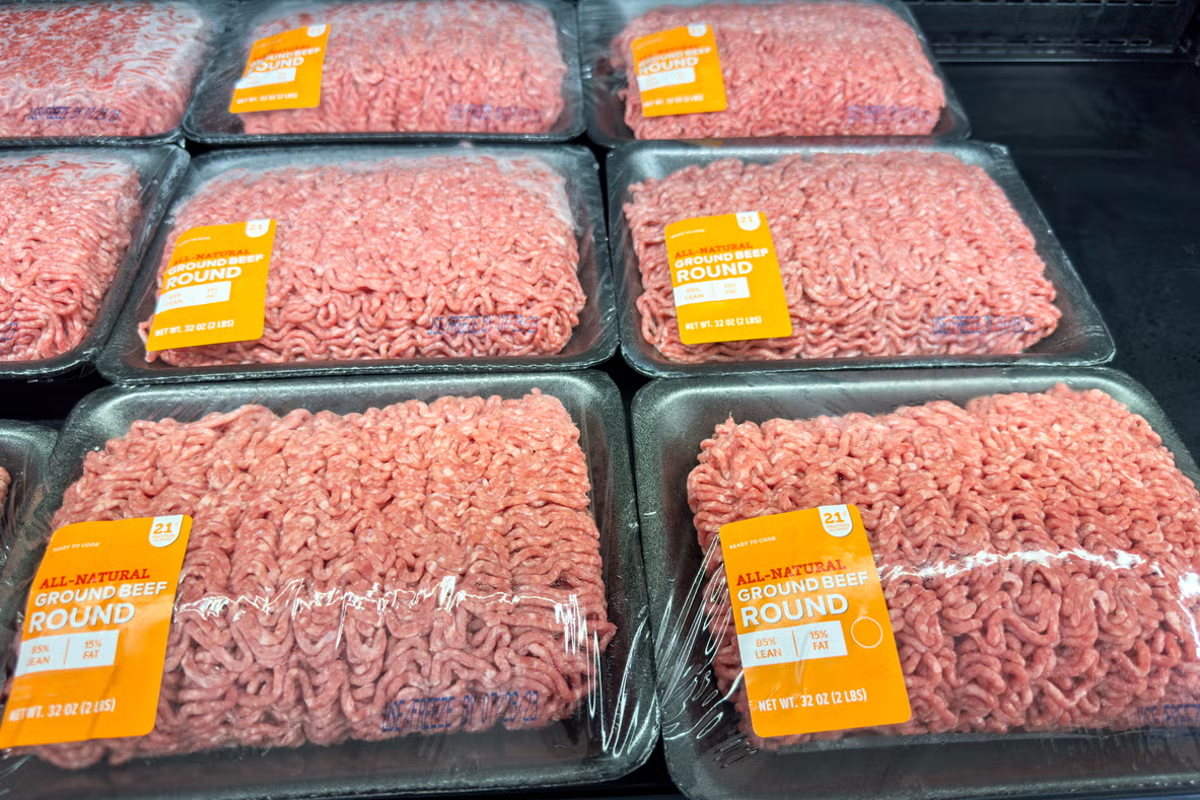
Ground beef prices climbed to another record in August, showing how difficult it may be to bring meat costs down quickly even as the U.S. increases beef imports and gradually reopens cattle trade with Mexico.
The average price of all uncooked ground beef reached $7.158 per pound, up 0.6% from July and 7.9% from a year earlier, according to Bureau of Labor Statistics data reported Friday. The broader CPI measure for uncooked ground beef was flat on a seasonally adjusted monthly basis but remained 7.2% higher than a year ago. Beef and veal prices were up 5.9% annually.
The record comes less than two weeks after President Donald Trump temporarily expanded the amount of imported lean beef trimmings eligible for lower tariff rates by 300,000 metric tons. The additional quota is being released in three monthly tranches of 100,000 metric tons from September through November, meaning most of that supply had not yet reached consumers when August prices were measured.
That timing leaves open the possibility of some price relief this fall. The larger obstacle is structural: the United States simply does not have as many cattle available as it once did.
USDA reported 28.5 million beef cows as of July 1, down 1% from a year earlier, while the 2026 calf crop was estimated at 32.5 million head, down 2%. Tighter calf supplies are expected to constrain feedlot placements into late 2026 and early 2027, keeping upward pressure on cattle prices even as imports rise.
Imports Can Help Faster Than the Herd Can Rebuild
The administration’s near-term strategy has focused on bringing more supply into the country.
The August proclamation specifically targets lean beef trimmings, which processors blend with fattier U.S. beef to produce hamburger and other ground-beef products. Bloomberg reported that much of the additional supply could come from Brazil. The program began September 1 and is scheduled to run for 90 days.
USDA has also restarted some live-cattle imports from Mexico after trade had been restricted over concerns about New World screwworm. The Douglas, Arizona, port reopened August 24 under new inspection protocols, while potential reopenings in Santa Teresa and Columbus, New Mexico, will depend on animal-health conditions. More than 2,500 feeder cattle had already entered through Douglas by early September, according to USDA data cited by Bloomberg.
Those measures increase supply faster than waiting for American ranchers to rebuild their herds, but the scale remains limited relative to the U.S. market.
USDA has already raised its beef-import outlook for 2026 and 2027, while projecting tighter domestic cattle supplies into next year. Bloomberg reported that imports are expected to account for a record roughly 20% of U.S. beef supplies this year.
Rebuilding the domestic herd takes much longer. Ranchers must retain breeding animals instead of sending them to slaughter, then wait for calves to be born, raised and eventually reach processing weight. That process can take years rather than months.
The administration has separately introduced measures intended to support domestic cattle producers and smaller meat processors, including loan guarantees and additional grazing flexibility in areas affected by natural disasters.
High Retail Prices Do Not Mean Easy Profits for Meatpackers
Expensive beef at grocery stores has not translated into stronger economics across the supply chain.
Meatpackers are paying historically high prices for scarce cattle while encountering growing resistance from consumers when they try to pass those costs through. Bloomberg reported that beef sales volumes were flat around the July Fourth holiday despite what is normally a strong seasonal period.
Tyson Foods has been one of the clearest examples of that pressure.
The company cut its annual profit outlook again in early September as losses in its beef business worsened. Tyson has been paying more for cattle while struggling to recover those costs from customers, and a recent decline in live-cattle prices also reduced the value of animals the company had purchased months earlier. Its shares fell after the revised forecast.
Other processors face similar pressure. The U.S. meatpacking industry has also faced renewed antitrust scrutiny because of its concentration, with Bloomberg reporting that an ongoing Justice Department investigation has expanded to include major retailers including Walmart and Amazon.
For consumers, the result is an unusual market in which ground beef can remain expensive even while parts of the cattle market weaken.
Live-cattle futures fell to their lowest intraday level since November 2025 in late August as traders anticipated additional imports. That may eventually reduce some costs for processors, but it does not immediately lower supermarket prices when the domestic herd remains historically small and supply contracts have already been negotiated.
The next few months will show whether the administration’s import expansion can meaningfully change that equation.
The first 100,000-metric-ton tranche of additional lower-tariff beef is entering the market in September, with two more scheduled through November. USDA is also expected to update its cattle, production and import forecasts as the new supply works through processors.
If ground-beef prices begin falling while cattle supplies remain tight, imports will likely deserve much of the credit. If prices remain near records despite those shipments, the market will be signaling that the U.S. herd shortage is still too large for short-term trade measures to overcome.