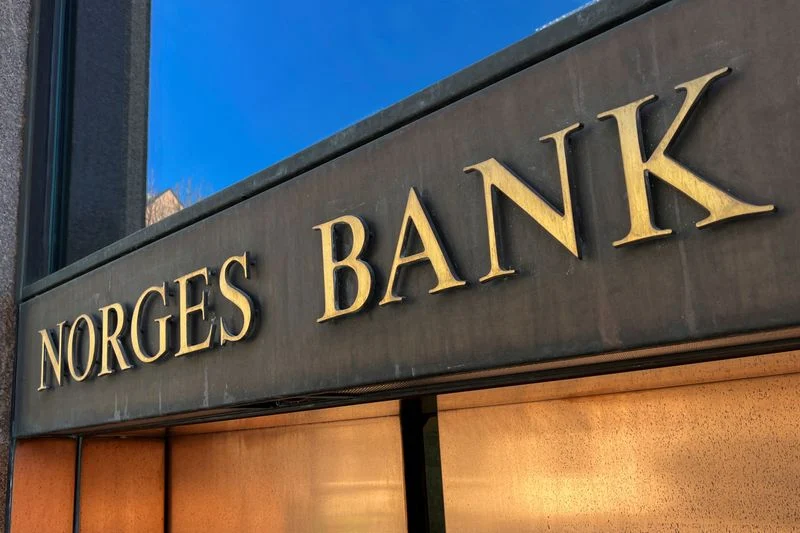
Norway’s central bank raised its policy rate by a quarter percentage point to 4.5%, completing a reversal of last year’s rate cuts as policymakers concluded that inflation remains too persistent to justify keeping borrowing costs unchanged.
The increase, announced Thursday after the Monetary Policy and Financial Stability Committee’s September meeting, followed a similar quarter-point hike in May and brings the benchmark rate back to the 4.5% level that prevailed before Norges Bank began easing in June 2025. The decision was closely contested among economists: 16 of 28 surveyed by Reuters had expected a September increase, while 12 anticipated no change.
The Norwegian krone strengthened following the announcement, moving to roughly 10.75 per euro from about 10.79 immediately beforehand. The relatively modest move was consistent with a decision that was partly anticipated, although the central bank’s willingness to consider additional tightening reinforced the prospect that Norwegian interest rates will remain high well into 2027.
Inflation Is Cooling, but Not Fast Enough
The rate increase came despite evidence that underlying price pressure moderated during the summer. Norway’s consumer price index rose 3.3% from a year earlier in August, while CPI adjusted for tax changes and excluding energy products — Norges Bank’s preferred measure of underlying inflation — increased 3.0%. Core inflation was below the central bank’s earlier projection of 3.3%, while the headline rate was lifted in part by higher energy prices.
That improvement was not enough to change the broader inflation assessment. Norges Bank has a 2% inflation target, and underlying inflation has remained near 3% for an extended period. Policymakers argued that keeping inflation above target for several years increases the risk that elevated price and wage growth becomes harder to unwind, particularly while external commodity and energy costs remain a source of pressure.
The decision therefore reflects less concern about the latest inflation print than about how slowly inflation is expected to return to target. Norges Bank now projects CPI-ATE inflation of 2.7% in 2027, 2.4% in 2028 and 2.1% in 2029. The central bank does not expect inflation to settle around its 2% objective until 2029, even with policy remaining restrictive.
Wage growth is also expected to remain relatively firm. Norges Bank projects annual wage growth of 4.4% this year before slowing to 4.0% in 2027 and 3.6% in 2028. Although slower wage increases should eventually reduce domestic inflation pressure, the current pace leaves policymakers with limited room to ease quickly.
Higher Rates Are Likely to Persist
The new rate path is more important for markets than the quarter-point increase alone. Norges Bank said the policy rate is expected to remain around 4.5% for a period before beginning a gradual decline from the end of 2027, with the rate falling to just below 3.5% toward the end of its forecast horizon. That represents a higher path further out than the bank projected in June.
Norges Bank also left the door open to another increase if inflation proves more persistent. Nordea Markets estimated that the central bank’s updated projections imply roughly a 40% probability of an additional hike during the next six months, though that should not be read as a commitment to raise rates again. The central bank’s stated baseline is still for the rate to remain near its current level for a time rather than begin a new sequence of increases.
For households, that means relief on borrowing costs is likely to remain delayed. Norges Bank projects the average residential mortgage rate rising from about 5.2% in the third quarter of 2026 to roughly 5.6% toward the end of 2027 before easing later. Higher financing costs should continue restraining interest-sensitive spending and investment even as lower inflation gradually improves real household purchasing power.
The central bank is accepting some additional economic cooling to achieve that disinflation. Mainland Norwegian GDP, which excludes the country’s oil and gas sector, is projected to grow just 0.9% in 2026 and 1.0% in both 2027 and 2028. Registered unemployment, currently around 2.1%, is expected to rise gradually to about 2.4% by 2028 as economic slack increases.
The next test arrives quickly. Norges Bank’s next rate decision is scheduled for November 5, while Statistics Norway will publish September inflation data on October 9. A continuation of the recent decline in core inflation would strengthen the case for holding at 4.5%, while renewed price pressure — particularly from energy, imported goods or wages — could keep another increase in play.