Uber is preparing to channel savings from its recent workforce reduction into lower prices and other growth investments, signaling that the company intends to use its improving cost structure to attract more riders rather than simply letting all of the savings flow to profit.
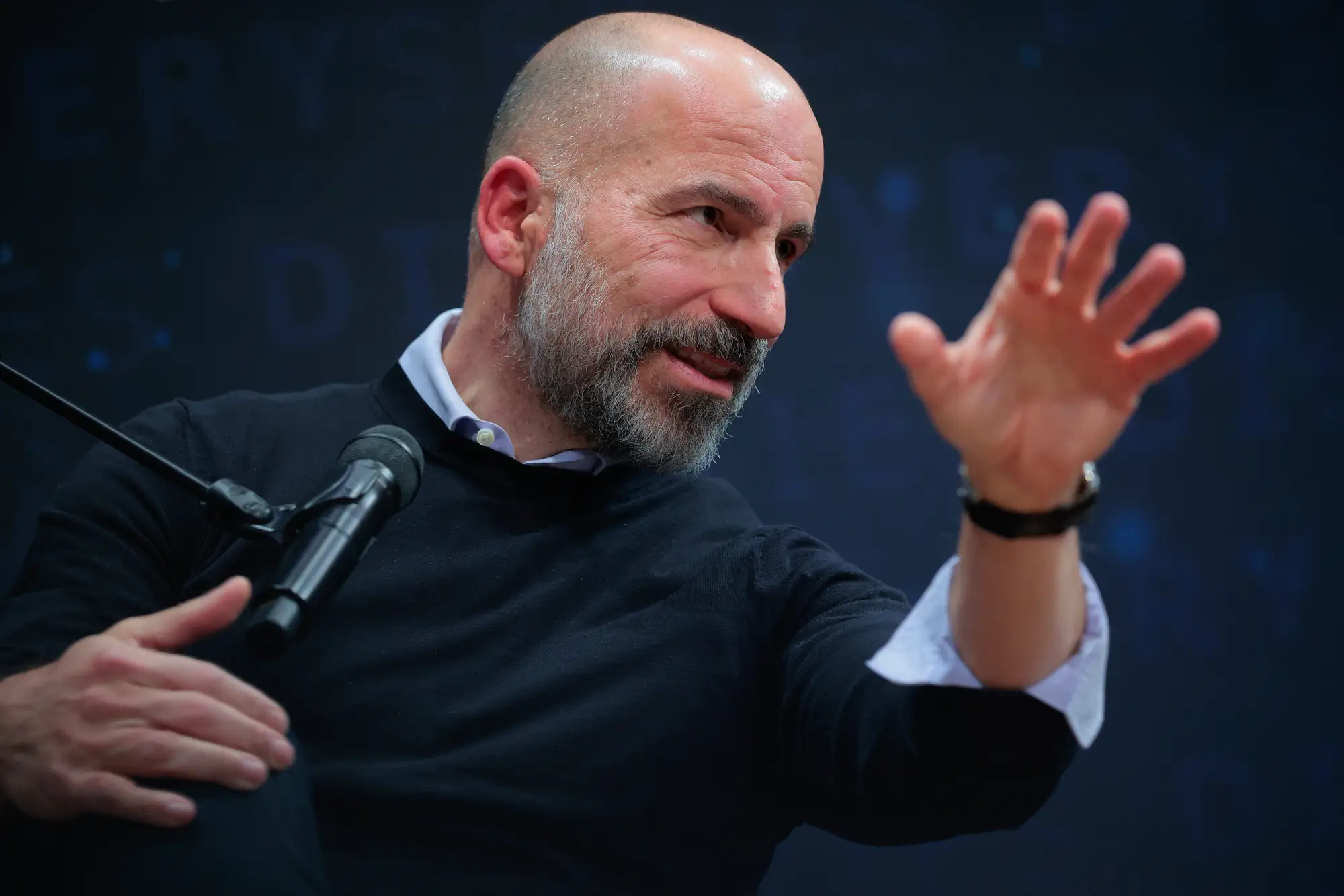
Chief Executive Dara Khosrowshahi said at Goldman Sachs’ Communacopia + Technology Conference that Uber plans to reinvest efficiency gains from its restructuring into reducing prices, improving selection and supporting growth initiatives.
The company announced earlier this month that it would cut about 10% of its full-time workforce while eliminating management layers and consolidating smaller teams. Uber had roughly 34,000 employees globally at the end of 2025, meaning the restructuring affects several thousand positions.
The move comes at an unusual point for a large technology company restructuring: Uber is not cutting staff because its core business is contracting.
Second-quarter gross bookings increased 24% to $58.0 billion, trips rose 18% to 3.87 billion and adjusted EBITDA climbed 33% to $2.82 billion. Uber generated $2.79 billion of free cash flow during the quarter, pushing trailing 12-month free cash flow above $10 billion for the first time.
That financial position gives Uber room to trade some near-term cost savings for faster volume growth.
Lower Prices Are Already Driving More Rides
The strategy is not entirely new.
Uber has already been reinvesting savings from lower insurance costs into ride affordability, particularly in U.S. markets where commercial insurance had become a significant expense.
During the second quarter, Mobility gross bookings increased 20% on a constant-currency basis, while segment operating income rose 28% to $2.22 billion.
Uber said trip growth in Los Angeles and San Francisco — two markets where prices fell the most — meaningfully outpaced the rest of the country. Management attributed part of that acceleration to insurance savings being passed through to consumers.
Khosrowshahi said last week that insurance remains a meaningful cost tailwind and that Uber intends to continue using those savings to reduce consumer prices.
The logic is straightforward: cheaper rides can increase frequency, attract more price-sensitive customers and make Uber economically viable for more everyday trips.
Uber does not need every product to carry the same margin.
The company has been expanding higher-margin services such as Uber Black, Uber for Business and premium rides while using some of those economics to support cheaper products including Wait & Save, which offers lower fares to riders willing to accept longer pickup times.
Uber for Business gross bookings grew more than 40% in the second quarter, and Uber said those trips generate substantially more contribution profit than standard UberX rides in its largest markets.
That gives the company another source of funding for affordability without requiring broad margin compression across the entire Mobility business.
Layoffs Are Funding Growth, Not Just Earnings
Uber’s restructuring therefore changes the investment story differently from a typical technology layoff.
Khosrowshahi said the company had accumulated too many management layers and small teams as it expanded. Uber said it cut the number of employees sitting seven or more organizational layers below the CEO by 20% and reduced what it calls “micro-teams” by nearly half.
Management also cited AI and other productivity tools as reasons the company can operate with fewer employees.
Uber has not publicly quantified the annual savings expected from the workforce reduction or specified exactly how much will go toward lower fares. That makes it premature to assume the restructuring will produce a specific improvement in operating margins.
Management has instead made its capital-allocation preference clearer: when efficiency gains can generate attractive additional demand, Uber is willing to reinvest them.
That approach is easier to justify because profitability is already expanding.
Non-GAAP operating income increased 40% in the second quarter to $2.14 billion, faster than gross bookings or revenue. Its margin on gross bookings increased to 3.7% from 3.3% a year earlier.
Uber is also continuing to invest heavily elsewhere. The company expects to commit more than $10 billion over coming years to autonomous-vehicle investments, infrastructure and vehicle commitments, while also pursuing its planned acquisition of Delivery Hero.
Those competing uses of cash make continued operating leverage important.
Uber Shares Remain Well Below Their High
Uber shares rose 1.3% Monday to $72.63 even as the Nasdaq Composite fell 0.6%. The stock remains well below its previous 52-week high.
Khosrowshahi also bought 141,000 Uber shares on the open market last week at a weighted average price of $70.96, spending roughly $10 million and increasing his direct ownership to about 1.37 million shares, according to an SEC filing. (sec.gov)
The purchase does not guarantee anything about future performance, but it came as investors continue debating whether autonomous vehicles will strengthen Uber’s platform or eventually pressure its economics.
Nearer term, the pricing strategy is easier to measure.
Uber expects third-quarter gross bookings of $58.25 billion to $60.25 billion, representing 18% to 22% constant-currency growth, while adjusted EBITDA is expected between $2.86 billion and $2.96 billion.
If lower prices continue producing faster trip growth without reversing margin expansion, Uber will have evidence that efficiency savings can fund additional scale rather than forcing a choice between growth and profitability.
The next earnings report should show whether that balance is holding. With workforce costs falling and insurance becoming less of a burden, the important number will not simply be how much Uber saves — it will be how much additional demand those savings can buy.