

SpaceX shares ended Friday at their lowest closing price on record after the company abruptly canceled the first Starship test flight attempted since its historic public-market debut.
The stock finished the session at $123.99, falling approximately 5.4% and extending its losing streak to six consecutive trading days. Shares dropped as low as roughly $122 during the session, setting another all-time low and moving further beneath the company’s $135 initial public offering price.
The decline followed an already difficult Thursday session, when SpaceX shares closed at $131.11. That marked the first time the stock had finished a full trading day below its IPO price since the company began trading publicly on June 12.
SpaceX shares had briefly fallen beneath the offering price Wednesday, reaching an intraday low of $132.75 before recovering to close at $135.27. However, the stock was unable to maintain that level during the following two sessions.
The company’s record-setting IPO priced shares at $135 before the stock opened for public trading at $150. Investor enthusiasm initially pushed the price as high as $225.64 on June 16, only a few days after its debut. Since reaching that peak, SpaceX shares have fallen approximately 45%, erasing nearly $1 trillion from the company’s highest market valuation.
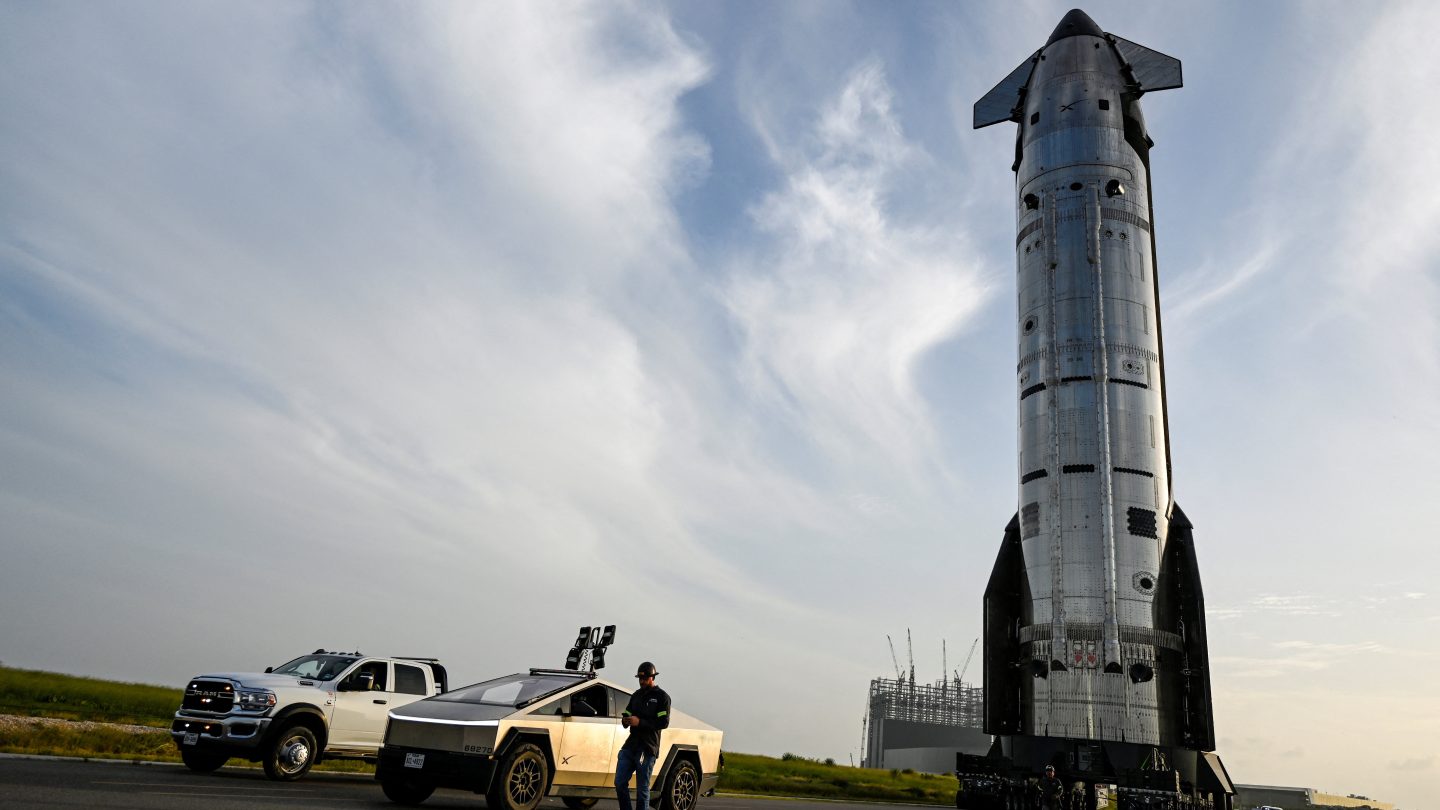
The latest pressure arrived after SpaceX attempted to conduct Starship’s 13th test flight Thursday evening from its Starbase facility in South Texas. The flight would have been the first Starship mission since SpaceX completed its IPO.
Starship, which SpaceX describes as the most powerful launch vehicle ever developed, was fully stacked at the launch site with Ship 40 positioned above Booster 20, the mission’s Super Heavy first stage. The flight was also expected to serve as the second test of SpaceX’s larger and more powerful Version 3 Starship design.
The countdown proceeded normally until the rocket reached the moment of ignition. As the Super Heavy booster began attempting to start its 33 Raptor engines, the vehicle’s automated systems triggered a launch abort at T-0.
The rocket remained on the launchpad and never lifted off.
SpaceX began removing liquid methane and liquid oxygen from the vehicle after the launch was canceled. Company representatives said during the broadcast that the booster initiated a hold while the Raptor engines were beginning their ignition sequence.
Elon Musk later explained that some of the engines failed to start, causing the automatic abort system to stop the launch. Musk said SpaceX planned to remove and replace two Raptor engines before making another attempt.
SpaceX subsequently targeted Monday, July 20, for the next possible launch. The planned 90-minute window is expected to open at 5:45 p.m. Central time, although the timing remains dependent on the completion of repairs, testing and final launch preparations.
Flight 13 was designed to accomplish several important technical objectives following problems encountered during Starship’s previous test.
The Super Heavy booster was supposed to separate from the upper stage and perform a controlled splashdown in the Gulf of Mexico. Starship’s upper stage was expected to continue along a suborbital path, deploy 20 upgraded Starlink Version 3 satellites and then reenter the atmosphere before splashing down in the Indian Ocean.
The satellites were intended to briefly communicate with the larger Starlink network after deployment. Because they would remain on Starship’s suborbital trajectory, they were expected to reenter the atmosphere and burn up roughly 20 minutes later rather than remain permanently in orbit.
The mission would have represented the first time Starship carried Starlink Version 3 satellites. An earlier flight used simulated payloads to test the rocket’s deployment system.
Flight 13 was also intended to demonstrate improvements to Starship’s heat shield, maneuverability and overall flight performance. Those changes followed the May test of the first Version 3 vehicle, during which the Starship upper stage completed several objectives but the Super Heavy booster encountered problems while attempting its return maneuver.
During that earlier mission, the upper stage successfully released 20 Starlink simulators and two test satellites. It also completed a banking maneuver and tests designed to place additional stress on the vehicle’s flaps before ending with a planned destruction during its Indian Ocean splashdown.
The Super Heavy booster was supposed to perform a simulated landing in the Gulf of Mexico. However, its engines failed to restart properly during the return burn, causing the booster to tumble toward the water and explode.
The Federal Aviation Administration closed its investigation into that incident shortly before Flight 13. The agency accepted the results of SpaceX’s investigation and the corrective measures proposed by the company, including four hardware and software changes intended to prevent the same problems from happening again.
Although investors were hoping a successful test would help stabilize SpaceX shares, some Wall Street analysts had warned that Starship’s development would probably include both progress and setbacks.
JPMorgan analyst Seth Seifman said investors would have several technical details to evaluate after Flight 13. He noted that SpaceX ultimately wants to increase Starship operations from dozens of launches next year to hundreds in 2028 and potentially thousands in later years.
Seifman suggested the long-term economics of Starship may be more important than the result of any single test flight. One of the most significant questions is how quickly SpaceX can refurbish and reuse the same upper stage after it returns from space.
Rapid and inexpensive reusability is essential to SpaceX’s broader plans. The company intends to use Starship for larger Starlink deployments, satellite missions, lunar exploration and eventually high-volume launches supporting proposed orbital data centers and artificial-intelligence infrastructure.
NASA is also relying on a modified version of Starship to serve as a lunar landing system for future Artemis missions.
Despite the recent stock decline, many Wall Street analysts remain optimistic about SpaceX’s collection of interconnected businesses. Those operations include rocket launches, Starlink broadband, direct-to-phone satellite service, terrestrial and proposed orbital data centers, government missions and artificial-intelligence products.
However, the canceled launch added another source of uncertainty as investors wait for SpaceX’s first quarterly earnings report as a public company, which is expected around the middle of August.
That report will give investors their first detailed look at the company’s performance since the IPO. It will also arrive as certain employee and early-investor restrictions begin approaching expiration, potentially allowing additional SpaceX shares to enter the public market.
For now, investors who purchased shares at the $135 IPO price are holding the stock at a loss, while those who bought near the June peak have experienced a significantly larger decline.
Source: Yahoo Finance