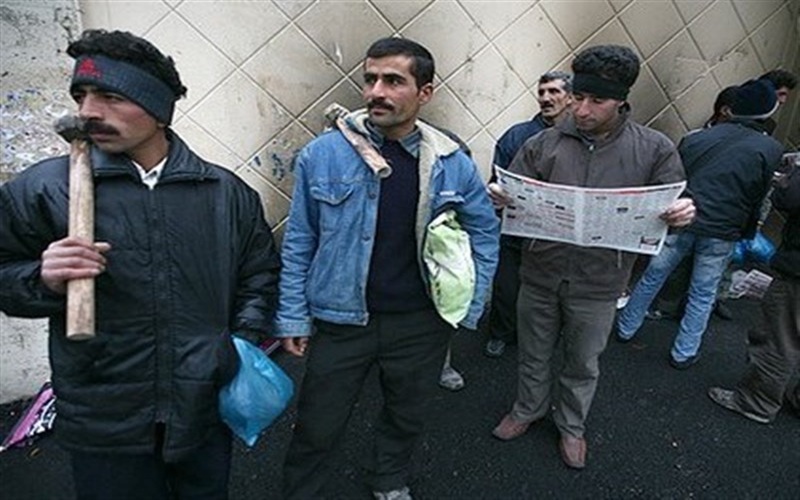
Iran’s economy was already experiencing an extraordinary surge in inflation, collapsing purchasing power and widespread public frustration before the current war began, complicating attempts to attribute the country’s economic deterioration primarily to military conflict and the latest round of external pressure.
The war has unquestionably made Iran’s problems worse.
Military strikes, tighter sanctions, severe disruption to oil exports, damage to infrastructure and restrictions around the Strait of Hormuz have placed additional pressure on government finances, businesses and ordinary households.
But data from the months immediately preceding the conflict show that Iran entered the war with an economy already under severe strain.
Official Iranian statistics for Bahman, the Iranian calendar month running from January 21 through February 19, showed year-over-year consumer inflation reaching 68.1%.
That represented an increase of roughly eight percentage points in only one month.
Food and beverage prices had risen even faster.
They were approximately 105.5% higher than during the same period a year earlier.
In practical terms, Iranian households were paying more than twice as much for the same broad category of food and beverages as they had one year earlier.
Monthly consumer prices also increased sharply.
Iran’s Statistical Center reported that the consumer price index rose 9.4% from the previous month.
The country’s 12-month average inflation rate reached approximately 47.5%.
Those figures were reported before the U.S.-Israeli strikes that began the current conflict on February 28.
That timing has become politically significant inside Iran.
Government officials and supporters have increasingly pointed toward war, sanctions and foreign pressure when explaining deteriorating economic conditions.
Critics argue that those explanations fail to account for how quickly prices were already rising before the military conflict began.
Iran News Update framed that dispute as part of a larger struggle over responsibility for the country’s economic problems.
The publication argued that Iranian authorities are attempting to portray inflation, shortages and declining living standards primarily as consequences of external circumstances while minimizing the role of domestic economic policy.
That interpretation reflects the publication’s strongly critical political perspective toward Iran’s governing system and should be understood as analysis rather than a neutral economic finding.
Still, the underlying inflation figures are independently supported by official Iranian statistics.
The debate has also appeared among Iranian economists and analysts.
Comments circulated September 1 by a Telegram channel identified as Khaneh-ye Eqtesad included criticism of the country’s economic policymaking structure.
Strategic affairs analyst Hossein Ahmadi questioned why prices had increased so dramatically and why economic uncertainty had generated what he characterized as extensive psychological strain among Iranians.
His argument focused partly on the concentration of economic power.
Ahmadi contended that influential groups benefiting from concentrated wealth had acquired significant influence over institutions involved in economic policy.
He pointed specifically toward economic ministries, the Central Bank and the legislative process.
The implication was that Iran’s economic problems cannot be understood solely through sanctions or wartime conditions because domestic political and economic interests also influence how resources and policies are managed.
Economic researcher Mohammad-Taher Rahimi made a more direct argument about inflation.
Rahimi challenged attempts to identify the war as the starting point of the inflation crisis.
He cited food inflation of approximately 105% during Bahman and said overall year-over-year inflation had climbed from roughly 30% to around 70% during the prewar period.
The official Statistical Center figures closely support the endpoint of that argument.
Food inflation was reported at 105.5%, while overall year-over-year inflation reached 68.1%.
The difference between approximately 68% and 70% is largely one of rounding.
The significance is not simply the level of inflation.
It is the speed of the acceleration.
A country entering a major conflict with food prices already increasing by more than 100% annually has far less economic capacity to absorb another shock than an economy beginning from stable conditions.
For households, the consequences were already visible.
Food was consuming a larger share of family budgets.
Wages were failing to keep pace with essential expenses.
Savings held in local currency were losing purchasing power.
Businesses faced difficulty setting prices because replacement costs for products could rise rapidly.
The Iranian rial was also under pressure.
By December 2025, the currency had already lost nearly half of its value amid sanctions, political uncertainty and domestic economic problems.
Inflation had reached 42.5% that month, helping trigger demonstrations that began with merchants and spread beyond purely economic complaints.
The protests that erupted in late December 2025 were initially driven in significant part by economic conditions.
The declining value of the rial, rising prices and uncertainty surrounding business activity brought merchants into the streets.
Tehran’s Grand Bazaar, historically an economically and politically influential institution, became one focal point of discontent.
Some demonstrators eventually moved beyond demands involving prices and currency stability and began directing criticism toward Iran’s political leadership.
The unrest demonstrated that economic grievances had already become politically destabilizing before the 2026 war.
President Masoud Pezeshkian’s government acknowledged many of the underlying economic problems.
Iranian authorities proposed reforms involving subsidies and the banking system, and the country installed a new central bank governor in late December.
Those moves did not stop the currency from weakening or prices from rising.
The February inflation numbers subsequently showed that the situation had deteriorated dramatically.
Food prices were experiencing particularly extreme increases.
The pressures continued after the war began.
By March, year-over-year inflation had moved above 70%, while food-related categories remained above 100%.
Bread, cereals, meat, dairy products, fruit and cooking oils all experienced exceptionally large increases.
The war then introduced new sources of economic disruption on top of those earlier problems.
Oil exports became one of the most important.
Iran depends heavily on energy exports for foreign currency and government revenue.
The U.S. naval blockade and sanctions campaign eventually caused crude exports to fall dramatically.
Iranian crude loadings dropped from approximately 2 million barrels per day in March to roughly 220,000 to 255,000 barrels per day during August.
That reduction deprived Tehran of one of its primary sources of hard currency.
Restricted access to foreign currency makes it more difficult to pay for imports.
It can also increase pressure on the rial.
A weaker currency makes imported products more expensive, feeding inflation further.
The effect can become self-reinforcing.
Lower oil revenue reduces foreign-exchange availability.
The rial weakens.
Imports become more expensive.
Prices rise.
The government then faces pressure to increase wages, subsidies or other spending while receiving less revenue.
If the state finances those obligations through monetary expansion, inflation can accelerate even further.
Iranian officials have rejected suggestions that the economy is on the verge of outright collapse.
Central Bank Governor Abdolnaser Hemmati has said Iran retains adequate foreign-currency resources and has additional reserves available.
He announced that the central bank was prepared to inject as much as $2 billion into the foreign-exchange market if necessary to limit volatility.
Hemmati has also disputed descriptions of Iran as experiencing hyperinflation.
His position is that severe inflation and currency pressure have not yet produced complete monetary breakdown.
Independent data nevertheless show how serious the deterioration has become.
By July, inflation was running around 66%.
Food prices were approximately 128% higher than a year earlier.
The rial subsequently fell beyond 2 million rials to the U.S. dollar and reached new record lows.
The IMF has projected Iranian inflation approaching 70% during 2026.
The economy is also expected to contract substantially as reduced trade, infrastructure damage and sanctions suppress economic activity.
Iran’s president has acknowledged the economic damage.
Pezeshkian said foreign trade had declined about 35% as sanctions and the disruption of shipping intensified.
Other Iranian officials have publicly identified inflation, unemployment, insufficient economic growth and weak domestic production as serious national problems.
Those acknowledgments complicate any simple narrative that economic hardship is merely a foreign fabrication.
There is also little question that sanctions have played a major role in Iran’s long-term economic difficulties.
Iran has faced extensive U.S. restrictions affecting oil exports, banking, international payments, investment and access to technology.
Sanctions have raised transaction costs and isolated the country from large parts of the global financial system.
Foreign companies have often avoided Iran even when specific activity might technically be allowed because of the risk of violating U.S. restrictions.
Iran’s dependence on a relatively small group of trading partners has consequently increased.
China remains particularly important as a buyer of Iranian oil and supplier of goods.
Turkey, Iraq and the United Arab Emirates have also been important economic partners.
The latest U.S. pressure campaign has attempted to make those relationships more difficult.
Washington has threatened secondary sanctions against countries and companies that continue conducting certain business with Tehran.
That pressure has increased Iran’s international isolation.
The United Arab Emirates recently suspended some trade with Iran, while other countries have been forced to weigh their economic relationships with Tehran against their much larger exposure to the United States and the international financial system.
These external pressures are real.
The argument inside Iran is therefore not whether sanctions and war damage the economy.
They clearly do.
The dispute is over how much responsibility should be assigned to those pressures compared with longstanding domestic weaknesses.
Critics point toward corruption, rent-seeking, weak governance, inefficient state enterprises and the large economic role of politically connected institutions.
The Islamic Revolutionary Guard Corps has developed extensive involvement in sectors ranging from oil and construction to transportation.
Iranian merchants interviewed before the war complained that politically connected organizations had gained economic influence while traditional private businesses struggled under sanctions, inflation and unstable regulation.
Critics also argue that unpredictable policymaking makes productive investment difficult.
Businesses planning new factories or expansions need some ability to estimate future exchange rates, input costs, taxes and regulations.
Rapid currency depreciation and high inflation make such calculations extremely difficult.
Capital can therefore move toward property, foreign currency, gold and other assets perceived as safer stores of value rather than investments that expand productive capacity.
Iran News Update interprets these conditions as evidence of what it describes as years of corruption, mismanagement, rent-seeking and organized economic exploitation.
Those descriptions reflect the publication’s political assessment.
It argues that powerful groups have concentrated wealth while Iran’s productive economy has weakened.
The publication further contends that war gives authorities a politically convenient explanation for economic conditions that were developing much earlier.
In that interpretation, portraying shortages and inflation primarily as wartime consequences allows the government to present itself as the victim of outside events rather than confront questions about domestic economic management.
The article connected that argument to political theorist Franz Neumann.
Neumann wrote about the relationship between political power, authoritarian systems and the management of public behavior.
Iran News Update invoked that framework to argue that Iran’s leadership is not only trying to manage an economic crisis but also attempting to shape how citizens interpret their hardship.
The argument is fundamentally political rather than statistical.
Economic data can establish when inflation occurred and how quickly prices increased.
Determining whether government messaging is deliberately designed to redirect blame requires interpretation of political behavior and cannot be demonstrated by inflation figures alone.
Public reaction nevertheless matters because economic conditions have already generated unrest.
Iran’s declining purchasing power has affected households across income groups.
Many families have reduced consumption of food and other essentials.
Others have taken additional jobs or moved to less expensive areas.
Businesses have closed or reduced staffing.
Workers in industries damaged by the war have experienced layoffs or interruptions to income.
Even before those wartime disruptions, inflation had been shrinking household purchasing power.
That creates a political challenge for any government.
When people experience years of rising prices, a new external shock may explain why conditions suddenly deteriorate further, but it does not erase memories of earlier hardship.
Iran News Update argued that this historical experience makes it difficult for authorities to attribute the entire crisis to the war.
The publication cited Iranian economist Hossein Raghfar as another indicator of the depth of dissatisfaction.
In remarks it said were published by Didar on August 29, Raghfar was described as saying public dissatisfaction had reached a level he considered unprecedented over a very long period.
That particular characterization has not been independently confirmed in precisely the same wording, and other reports have attributed slightly different timeframes to Raghfar.
His broader concern about Iran’s economic conditions is well documented.
Raghfar has publicly warned about deteriorating living standards, inflation and the risk of even more severe price instability.
Other Iranian officials have also shown increasing concern about economic grievances developing into unrest.
Police chief Ahmad-Reza Radan recently warned that economic complaints involving livelihoods, gasoline prices and unemployment could become catalysts for demonstrations.
He framed the possibility in terms of foreign adversaries attempting to exploit domestic grievances.
That response captures the broader disagreement.
Iranian officials frequently argue that outside powers use genuine economic problems to destabilize the country.
Opposition groups argue that invoking foreign involvement allows the government to avoid responsibility for conditions created domestically.
Both elements can exist at the same time.
Iran is facing extraordinary foreign pressure.
It is also dealing with serious economic weaknesses that existed before the current conflict.
The war has now magnified nearly every one of them.
Infrastructure attacks have contributed to power outages, water problems and fuel shortages.
Trade has slowed.
Oil exports have collapsed.
Foreign currency has become more difficult to obtain.
Businesses face more uncertainty.
The government has less revenue.
Households are paying significantly more for necessities.
International sanctions are becoming tighter.
Those developments have pushed inflation and economic stress well beyond already severe prewar levels.
Yet the timeline remains important.
In December 2025, inflation had already reached 42.5% and the rial had lost nearly half its value.
Economic protests had already erupted.
By Bahman, ending February 19, overall year-over-year inflation had reached 68.1%.
Food and beverage inflation had reached 105.5%.
Those numbers were recorded before the February 28 U.S.-Israeli attack that began the current war.
That makes it impossible to explain the original surge purely as a consequence of the fighting.
The conflict instead struck an economy that was already experiencing one of its most difficult periods in decades.
Since then, inflation has moved higher still.
Food prices have continued increasing at triple-digit rates.
The currency has reached record lows.
Oil exports have been severely reduced.
Foreign trade has declined.
The conflict and sanctions have therefore transformed a preexisting economic crisis into a considerably deeper one.
The political consequences remain difficult to predict.
Iran’s government has survived previous periods of sanctions, recession, currency depreciation and mass protest.
Its security institutions retain extensive tools for suppressing unrest.
The state also continues receiving support and conducting trade through countries willing to maintain relationships despite American pressure.
Economic hardship by itself does not guarantee political change.
But prolonged inflation can steadily undermine confidence because it affects ordinary life every day.
A household can temporarily adjust to a short-term price increase.
Years of repeated increases are more difficult.
Savings lose value.
Wages continually fall behind.
Families reduce the quality or amount of food they purchase.
Young people find it more difficult to establish independent households.
Businesses lose the ability to plan.
Those accumulated pressures help explain why debates over responsibility have become politically important.
Iran News Update argues that the country is experiencing not merely an economic crisis but an expanding crisis of political legitimacy.
Its position is that a widening gap has developed between the government’s explanations and the experiences of citizens who watched conditions deteriorate before the current war.
That conclusion should be understood as the outlet’s opposition-oriented political analysis rather than an independently established fact.
What can be established from the economic record is narrower but still significant.
Iran was already experiencing accelerating inflation, soaring food prices, currency weakness and serious public dissatisfaction before military conflict created another enormous shock.
The war did not create those vulnerabilities.
It intensified them.
Whether Iranians primarily blame sanctions, foreign military action, domestic economic management or some combination of all three will remain part of the country’s political struggle.
But economically, the sequence is increasingly clear.
Iran entered the war in crisis.
Six months of military conflict, sanctions and disruption to oil exports have turned that crisis into something considerably more severe.