The U.S. stock market has another obstacle standing in the way of its recent momentum: investors are increasingly preparing for the possibility that interest rates could rise rather than fall.
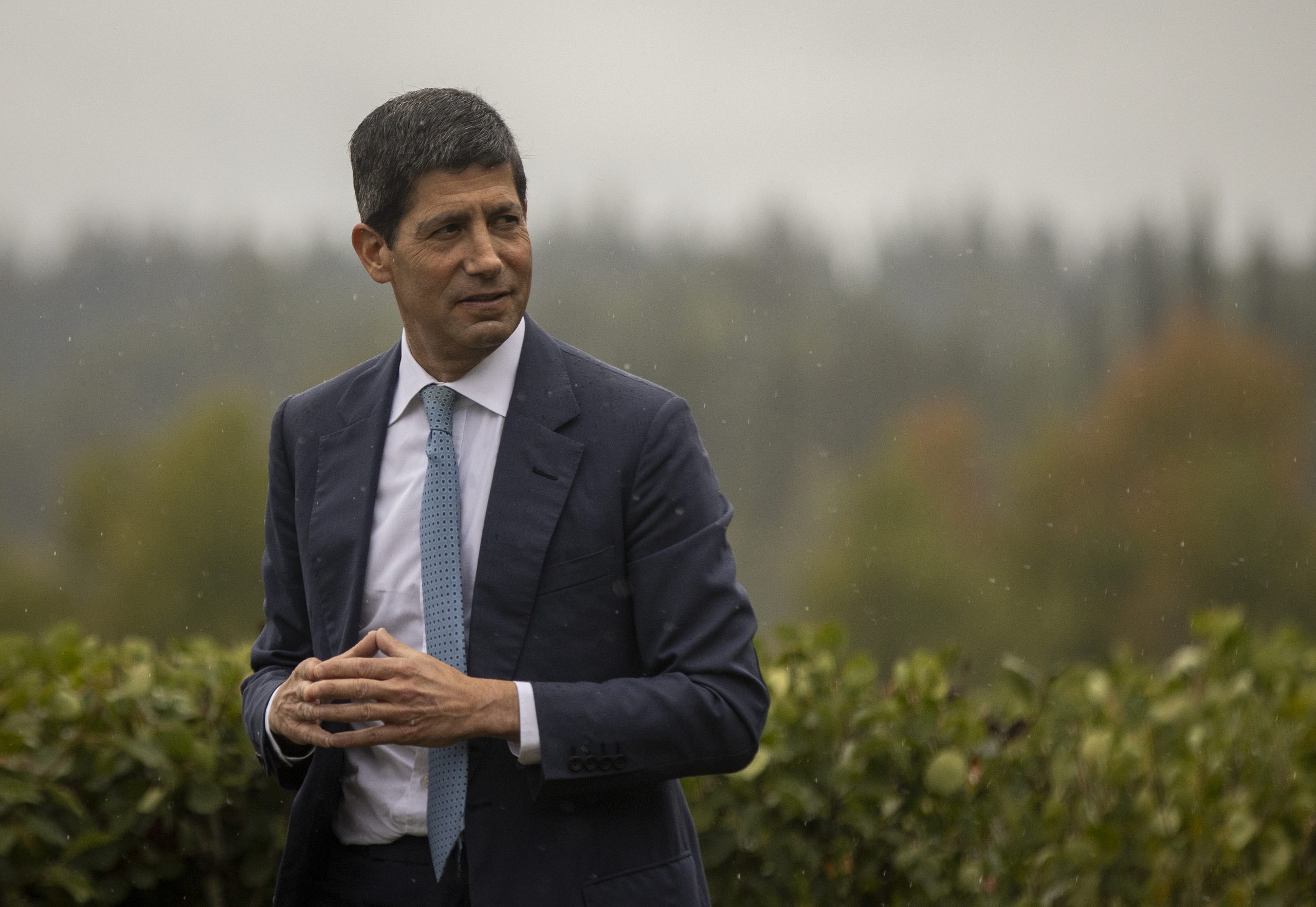
Federal Reserve Chairman Kevin Warsh delivered a notably hawkish message during his first keynote address as Fed chair at the annual Jackson Hole Economic Policy Symposium, challenging expectations among investors who had hoped the central bank might be moving closer to easier monetary policy.
Instead of signaling that lower interest rates could be approaching, Warsh emphasized that inflation remains too high and made clear that returning price growth to the Federal Reserve’s 2% target remains a central priority.
The message immediately complicated the outlook for stocks.
Although corporate earnings and other underlying fundamentals remain relatively healthy, Citigroup U.S. equity strategist Scott Chronert said expectations for higher interest rates could create a significant sentiment problem for the market.
Warsh’s remarks were particularly important because some investors had expected him to take a more accommodative approach after becoming Fed chairman. His Jackson Hole speech suggested otherwise.
Warsh said inflation remains above the central bank’s 2% objective and argued that policymakers need to remain focused on bringing prices under control. He described the recent inflation picture as troubling and indicated that the Fed needs convincing evidence that underlying inflation is moving toward the central bank’s target at an acceptable pace.
If that progress does not materialize, Warsh suggested additional monetary-policy action could be necessary.
Official Fed data cited by Warsh showed why policymakers remain concerned. The 12-month increase in the personal consumption expenditures price index, the Fed’s preferred inflation measure, stood at 3.7%, while the six-month rate was running at 4.1%. Core inflation measures and the Consumer Price Index were also elevated.
Warsh acknowledged that inflation has fallen considerably from its 2022 peak but said progress during the past two years has been limited.
At the same time, he did not describe the economy as being in obvious distress.
Consumer spending has remained relatively healthy, private domestic demand has continued growing and the labor market has remained comparatively stable. The unemployment rate was 4.1%, while jobless claims were near historically low levels when measured on a four-week average.
Warsh said he viewed the labor market as generally consistent with full employment.
That combination — relatively strong employment alongside inflation that remains well above target — gives the Fed less reason to rush toward lower rates.
Warsh also said he would have difficulty describing overall financial conditions as restrictive, despite signs of strain in areas such as housing and agriculture. That observation was particularly important to financial markets because it suggested current interest rates may not be doing enough to slow inflation.
Stocks reacted negatively.
The Dow Jones Industrial Average, S&P 500 and Nasdaq Composite all finished modestly lower following Warsh’s remarks. Treasury yields climbed as investors reassessed the likely direction of Federal Reserve policy.
Bond yields are particularly important for equity investors because higher yields can make stocks less attractive relative to fixed-income investments. They can also increase financing costs for companies while reducing the present value investors assign to businesses’ future profits.
That dynamic can become especially uncomfortable for companies trading at expensive valuation multiples.
By the time investors had digested Warsh’s message, financial markets were assigning roughly a 61% probability to an interest-rate increase at the Federal Open Market Committee’s September meeting.
That was a major change from the environment investors had been hoping for.
Rather than discussing when the Fed might begin easing policy, Wall Street suddenly found itself debating whether another rate increase could be coming.
Chronert said Warsh’s overall approach to the Federal Reserve appears reasonably balanced, but Citi’s expectations for a broader stock-market rally depend on several economic conditions improving.
One important factor is oil.
Lower oil prices could reduce inflationary pressure, which in turn could give the Federal Reserve greater flexibility to respond more dovishly if labor-market conditions weaken.
A broader market rally — in which gains expand beyond a relatively narrow group of dominant stocks — therefore may depend partly on declining energy costs, easing inflation and enough deterioration in employment conditions to allow policymakers to become less aggressive without creating fears of a recession.
The possibility of higher rates does not necessarily mean corporate profits are about to collapse. Earnings expectations remain relatively strong.
The issue is what investors are willing to pay for those earnings.
When interest rates stay higher, investors often become less willing to assign extremely high price-to-earnings multiples to stocks because safer investments such as Treasury securities offer more attractive returns. Companies can therefore continue producing healthy profits while their stocks struggle if valuations contract.
That is the sentiment problem now facing Wall Street.
Miller Tabak chief market strategist Matt Maley also sees the recent developments involving the Federal Reserve, Treasury Department and financial markets as reinforcing concerns that have been building for years.
Maley argues that both stock and bond markets have become excessively dependent on government and central-bank support.
For more than 15 years, markets have operated through an environment that included extremely accommodative monetary policy, quantitative easing and other forms of financial intervention.
In Maley’s view, that prolonged support may have created a financial system that has difficulty functioning without policymakers providing some form of assistance.
Warsh, meanwhile, has made clear that he views short-term interest rates as the Fed’s primary tool for fulfilling its mandate. He has also expressed skepticism toward using unconventional measures such as quantitative easing outside genuine economic crises.
That philosophy matters to investors who became accustomed to aggressive central-bank intervention following the 2008 financial crisis and again during the COVID-19 pandemic.
The market could therefore be entering an environment in which investors receive less monetary-policy support than they have come to expect.
None of this guarantees the stock rally is finished.
Healthy corporate earnings, continued consumer spending and stable economic growth could still provide support for equities. However, investors now have to incorporate the possibility that interest rates could remain elevated — or potentially increase further — while inflation remains stubbornly above the Federal Reserve’s target.
That represents a major shift in expectations.
Until recently, one of Wall Street’s most important bullish assumptions was that cooling inflation would eventually allow the Federal Reserve to become more accommodative. Warsh’s Jackson Hole speech challenged that narrative by making clear that the fight against inflation is not finished.
For stocks to continue climbing, investors may now need strong corporate earnings to overcome both higher bond yields and the prospect of tighter monetary policy.
The next major test will come as investors receive additional inflation and employment data ahead of the September Federal Reserve meeting. Those reports could determine whether Warsh’s tough language remains primarily a warning or develops into an actual interest-rate increase.
For Wall Street, the problem is no longer simply whether economic growth can remain strong.
Investors must now determine how high stock valuations can remain if the era of consistently supportive Federal Reserve policy becomes much less certain.