
President Donald Trump’s escalating confrontation with Iran is adding new pressure to a global fuel market already struggling with damaged refineries, declining exports and unusually low supplies of gasoline, diesel and jet fuel.
On July 13, Trump announced that the United States would reinstate its naval blockade of Iran and seek compensation equal to 20% of cargo moving through the Strait of Hormuz. Brent crude immediately jumped approximately 10% to $83 per barrel. The United States conducted additional strikes against Iran that night, while Iran responded by attacking two tankers associated with the United Arab Emirates.
Trump abandoned the proposed transit charge the following day, with the administration instead referring to unspecified investments from Gulf countries. The reversal helped prevent a larger increase in crude prices, as did market expectations that political pressure ahead of the U.S. midterm elections could eventually push the administration toward de-escalation.
Even after the latest confrontation effectively undermined the ceasefire reached in June and reduced Hormuz shipping traffic to extremely low levels, Brent crude remained approximately 25% below its April high. That relative stability, however, concealed a much more serious shortage in refined fuels.
The world currently has more crude oil available than refineries can process. Global production of refined petroleum products stands at approximately 79 million barrels per day, about 8 million barrels below prewar levels. Refineries damaged by military attacks, shut down by supply disruptions or operating below capacity are consuming less crude, creating the appearance of an adequately supplied oil market.
Gasoline, diesel and jet fuel remain much harder to obtain. Refined-product prices were reportedly between 35% and 70% above their prewar levels, while traders continued placing large bets that prices would climb further. The International Energy Agency has warned that the shortage could intensify substantially unless dependable shipping through Hormuz resumes.
European diesel-refining margins have reached exceptional levels. Reuters reported that they exceeded $60 per barrel, while European gasoline traded at a premium of approximately $41 per barrel over crude, its largest spread since the disruption that followed Russia’s invasion of Ukraine in 2022. The comparable U.S. refining indicator, known as the 3-2-1 crack spread, reached a record $64.58 per barrel on July 8.
Jet fuel has also become significantly more expensive. Asian prices reached approximately $160 per barrel on July 14, raising additional concerns for airlines and passengers already facing higher operating costs and the possibility of reduced flight capacity.
Whether the shortage becomes more severe will depend heavily on fuel production and exports from the Persian Gulf, China and Russia.
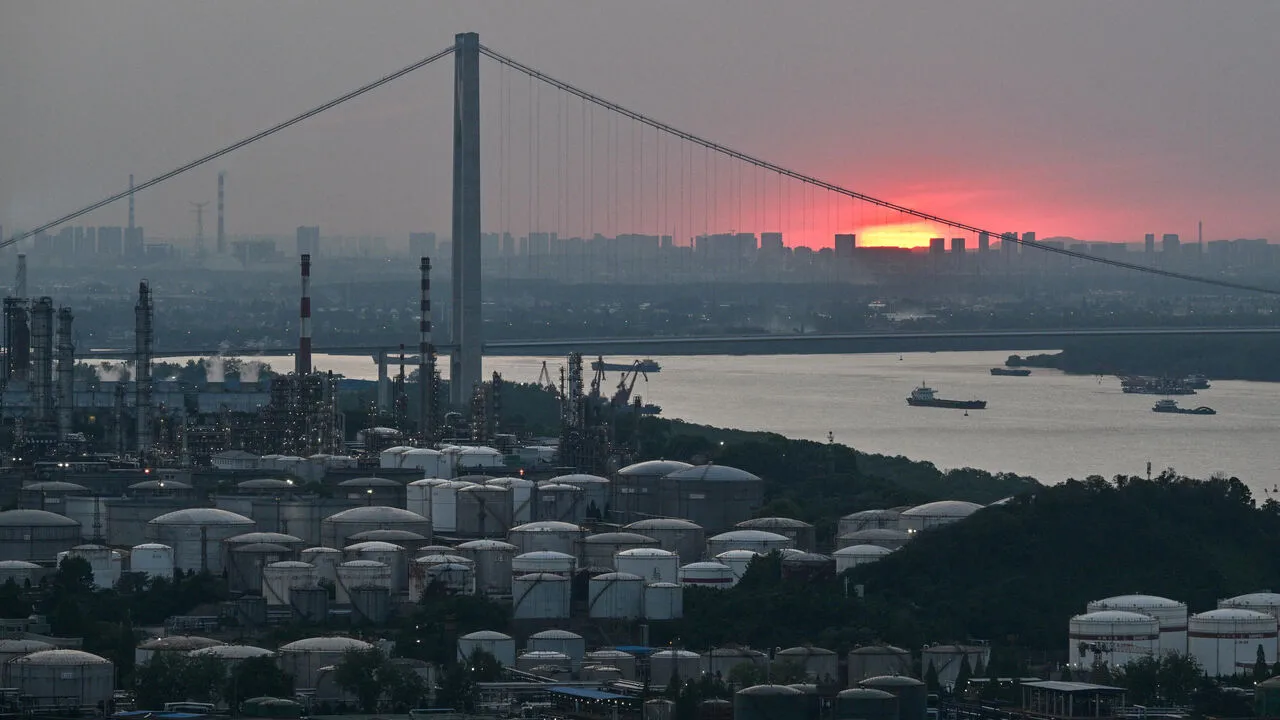
Before the conflict, Gulf countries were the world’s leading exporters of middle distillates, a category that includes diesel and jet fuel. With Hormuz largely closed since February, Gulf fuel exports have fallen dramatically, while refinery throughput has declined by approximately 30%, or 3 million barrels per day.
Some Gulf crude can avoid Hormuz by traveling through pipelines connected to terminals outside the strait. Refined petroleum products do not have an equivalent escape route. Although exports briefly improved when the waterway partially reopened, the latest hostilities have again reduced shipping, with Iranian crude among the limited supplies still moving out of the region.
Iranian attacks have also disabled an estimated 1.4 million barrels per day of Gulf refining capacity. The precise amount of damage remains uncertain, and some facilities may require extensive repairs. Sarah Raffoul of energy-market information provider Argus Media estimated that fuel exports could take three to four months to recover even if Hormuz reopens.
Shipping companies are increasingly reluctant to send vessels into the Gulf. Ship-tracking information showed that only five oil, chemical and dry-bulk vessels passed through Hormuz during one recent day, primarily using the Iranian side of the route. No oil or liquefied-natural-gas tankers were recorded entering the strait.
The attacks on two Emirati tankers have created additional concerns about whether scheduled cargoes will reach customers. Abu Dhabi National Oil Company had committed to selling more than 70 million barrels between June and August and may need to rely on supplies stored in Fujairah. Slower tanker movements could nevertheless delay deliveries.
Asian refiners may increasingly turn toward West Africa and Latin America for replacement crude, while Indian buyers could purchase more Russian oil. Refiners reportedly had adequate inventories at the time, but supplies could begin tightening by September if severe disruptions continue for another 10 to 15 days.
China represents another potential source of relief, but its refineries are processing approximately 3 million fewer barrels per day than they were in February. China is normally a major exporter of gasoline and diesel, yet the government prevented state-owned refiners from exporting during much of the war to protect domestic supplies.
Those restrictions were partially relaxed in July, provided that refiners maintained inventories at or above their late-February levels. China’s largest oil companies tentatively raised their combined export targets to approximately two-thirds of the amount shipped a year earlier. Renewed instability around Hormuz, however, could lead authorities to restore the broader export ban.
Russia’s refining industry is facing a separate crisis caused by Ukraine’s expanding drone campaign. Since April, Ukrainian forces have attacked Russian facilities more frequently, across a wider geographical area and at greater distances from the battlefield.
A major refinery in western Siberia, approximately 2,500 kilometers from the front line, was struck on July 6. Attacks have increasingly targeted complex refinery units responsible for converting basic crude-oil components into more valuable fuels. Some of that specialized equipment could require months to repair.
Russian refineries processed an estimated 3.8 million barrels per day during June, according to JPMorgan, down approximately 1.5 million barrels per day from January. The decline has created domestic gasoline and kerosene shortages during the summer travel season.
Drivers in certain Russian regions have reportedly waited in line for days, while authorities and retailers have rationed fuel. Pump prices in some areas have risen as much as 50% above normal levels. Agriculture, transportation companies, utilities and other fuel-dependent operations have also experienced disruptions.
Russia’s problems extend far beyond its domestic market. The country normally exports nearly half of the diesel it produces and almost all of its fuel oil, which is widely used by ships. Russia accounts for approximately 12% of global diesel exports, making it the world’s second-largest supplier, and about 16% of worldwide fuel-oil exports, placing it first in that category.
Russian diesel and gasoil exports had already dropped to a record low of roughly 400,000 barrels per day before falling to less than half that level during early July. Moscow subsequently prohibited additional diesel exports as it attempted to stabilize domestic supplies.
The loss of Russian fuel is forcing traditional customers to search elsewhere. Turkey may retain more diesel refined from imported Russian crude for its own consumers, reducing supplies available throughout the Mediterranean. Brazil has begun replacing Russian diesel with U.S. shipments, increasing competition for fuel across Atlantic markets.
Refiners may also prioritize diesel at the expense of gasoline and jet fuel, spreading shortages from one product into others. Higher diesel costs could become particularly damaging for Northern Hemisphere farmers preparing for the autumn harvest, when agricultural machinery and transportation networks require substantial amounts of fuel.
The most favorable outcome would involve a durable end to the Gulf fighting, the reliable reopening of Hormuz, greater Chinese fuel exports and the restoration of damaged Russian refining capacity. If those developments occur as the summer travel season ends, supply and demand could begin moving back toward balance.
A prolonged disruption would leave the United States, currently the market’s most important flexible exporter, attempting to supply more overseas customers while protecting its own consumers. Importing countries would also be forced to draw from inventories that were already below normal historical levels.
Eventually, refined-fuel prices could rise enough to reduce driving, flying, shipping and industrial activity. Higher refining margins would encourage facilities to process more crude, but that response could then push crude prices higher as well.
The global energy shock is therefore not over simply because headline crude prices have moved below their earlier peaks. For drivers in the United States and Europe, future prices at the pump remain tied to military attacks, political decisions and damaged energy infrastructure thousands of miles away.