
Gasoline prices have remained unpredictable as geopolitical conflicts, changing oil markets and seasonal demand continue affecting what motorists pay. Those fluctuations can make household budgeting more difficult, particularly for commuters and families that depend on their vehicles every day.
Several free Android and iPhone apps can help drivers compare nearby prices, earn fuel discounts, receive cash back or monitor vehicle expenses without necessarily reducing how much they drive.
GasBuddy is among the most recognizable options and has operated since 2000. Users can enter a ZIP code to compare prices at nearby stations. Its information comes from a mixture of user submissions and data supplied by fuel retailers, meaning prices may occasionally be outdated but are generally close to what drivers find at the pump.
The company also offers Pay with GasBuddy, which provides a payment card connected to the user’s checking account. Enrollment requires personal information that includes an address, driver’s license details and a bank-routing number. Purchases through participating shopping and dining offers can generate GasBack rewards that may be applied toward fuel. The report said the standard program could save users as much as 25 cents per gallon.
Frequent drivers can pay for GasBuddy Premium, which costs $9.99 per month or $99 annually. Members receive a guaranteed discount of 20 cents per gallon on as many as 50 gallons during each monthly period, while combined discounts can reach approximately 50 cents per gallon under certain offers. GasBuddy’s current terms say Premium members can receive 22 cents at select stations and combine membership savings with activated app deals and other rewards.
Gas Guru, which is offered through Yellow Pages, provides local fuel prices and allows motorists to filter stations by distance, price and fuel grade. Its information comes from the Oil Price Information Service, commonly known as OPIS. The app also displays businesses and restaurants near each station, making it easier for drivers to combine a fuel stop with other errands.
AAA TripTik Travel Planner is not exclusively a gas-price application, but it can identify fuel stations and prices along a planned route. Although AAA roadside assistance requires a paid membership, the TripTik planning service is available to nonmembers at no charge. It contains information for more than 100,000 gas stations and electric-vehicle charging locations and can also be used to organize longer road trips.
MapQuest offers another option for motorists who want fuel information built into a navigation service. Its mobile app can locate stations along a route, compare reported prices and direct drivers toward less expensive locations. It also includes turn-by-turn navigation, traffic information and restaurant-reservation features.
Upside takes a different approach by offering cash back at participating gas stations, grocery stores and restaurants. Users select an offer, make the qualifying purchase and may be required to upload a receipt or otherwise verify the transaction.
The U.S. News guide said Upside guarantees at least 1 cent per gallon in cash back, with offers of 10 cents or more commonly available. Rewards can be transferred to a bank account or converted into a digital gift card. The article also listed PayPal as an option, although Upside’s current support information says PayPal is generally available only to people who used that withdrawal method before ongoing support was discontinued in late 2025.
The original guide reported a $1 charge for PayPal withdrawals below $15 and bank transfers below $10. Upside’s current help center more generally warns that cash-outs below $15 may be assessed a $1 fee.
Fuelio is designed for drivers who want to understand their overall vehicle expenses rather than simply locate the lowest nearby price. It records fill-ups, calculates fuel economy and helps users track maintenance, tolls, parking and other ownership costs.
BP customers can use the Earnify app to receive a discount of 5 cents per gallon at participating stations. Amazon Prime members can connect their accounts to receive another 5 cents, producing a combined discount of 10 cents per gallon.
Earnify members also accumulate points on qualifying purchases. Those points may be exchanged for additional fuel discounts or products sold inside participating convenience stores. New users receive a 250-point welcome offer, according to BP.
Shell’s mobile app allows drivers to join its Fuel Rewards program. The guide said new members could save 10 cents per gallon on their first fill-up, 20 cents on their second and 30 cents on their third before moving into the program’s regular membership structure.
Silver members ordinarily save at least 3 cents per gallon. Gold members save at least 5 cents after completing six qualifying fill-ups within three months. Platinum status provides at least 10 cents per gallon in savings and generally requires 12 qualifying fill-ups of at least 10 gallons during the three-month period. Drivers purchasing Shell V-Power premium gasoline can qualify for Platinum with six eligible fill-ups.
Speedway customers can use the Speedy Rewards app to earn points on gasoline, snacks and other eligible purchases. Members receive 10 points for each gallon of fuel and 20 points for every dollar spent on qualifying merchandise.
The points can be exchanged for fuel discounts or convenience-store products. Users can also choose special monthly perks that increase earnings or provide additional savings. The app includes station locations, current gas-price information and account-management features.
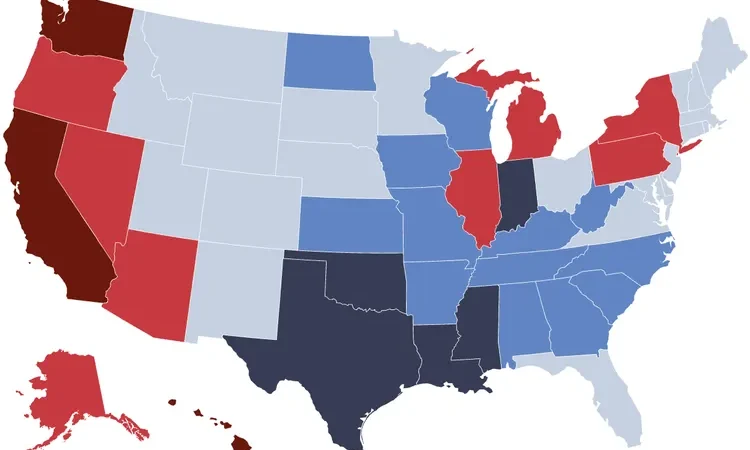
The amount drivers can save depends partly on where they live. State taxes, environmental fuel requirements, refinery access, distribution expenses and transportation distances can create large differences between regions.
The article placed Alaska, California, Hawaii, Idaho, Illinois, Nevada, New York, Oregon and Washington in the highest group, with regular gasoline ranging from approximately $4 to $5.44 per gallon.
Arizona, Connecticut, Montana, New Hampshire, New Jersey, New Mexico, Michigan, Pennsylvania, Utah and Vermont were placed in a range of roughly $3.90 to $4.
Colorado, Delaware, Ohio, Florida, Maine, Maryland, New Hampshire, Rhode Island, West Virginia and Wyoming were listed between $3.79 and $3.90. New Hampshire appeared in two separate ranges in the source table, which appears to have been a duplication.
Georgia, Iowa, Nebraska, North Carolina, North Dakota, Minnesota, South Carolina, South Dakota, Virginia and Wisconsin were grouped between approximately $3.56 and $3.79.
Alabama, Arkansas, Indiana, Kansas, Kentucky, Louisiana, Mississippi, Missouri, Oklahoma, Tennessee and Texas were listed in the lowest range, from approximately $3.23 to $3.56. Massachusetts was not included in the source table.
Western states have historically experienced some of the country’s highest fuel costs, while Gulf Coast states often benefit from their proximity to refineries and petroleum-distribution infrastructure. The figures were described as a temporary snapshot because retail prices can change frequently.
Applications and loyalty programs are not the only ways to lower fuel expenses. Drivers should regularly check their tire pressure and use the manufacturer’s recommended PSI, which can normally be found inside the driver’s door or in the owner’s manual. The Department of Energy estimates that fuel economy can decrease by approximately 0.2% for every 1 PSI decline in average tire pressure.
Using a vehicle’s air conditioner at its highest setting can also increase fuel consumption. Drivers may be able to reduce usage when conditions make that practical, although comfort and safety should remain the priority.
The guide also cited a February 2026 GasBuddy analysis indicating that Sundays generally offered the lowest prices during the week. The difference could amount to approximately 4 to 9 cents per gallon compared with more expensive days. Mondays were also commonly among the least costly times to refuel.
Warehouse clubs such as Costco, Sam’s Club and BJ’s frequently sell fuel below surrounding retail prices. Potential savings can range from about 5 to 30 cents per gallon, although membership fees and the distance required to reach a warehouse station can reduce the financial benefit. This strategy is most useful for consumers who already shop at the club regularly.
Rewards credit cards can provide another 2% to 5% in cash back or equivalent points on gasoline. The guide used the Sam’s Club Mastercard as an example, noting that it offers 5% back on the first $6,000 in annual gas purchases before dropping to 1%. Drivers may increase their total savings by combining a rewards card with a lower-priced station or compatible loyalty program.
Consumers planning to replace their vehicle may also consider a model with stronger fuel economy. Moving to a hybrid or fully electric vehicle can substantially reduce gasoline use, although buyers should also evaluate the purchase price, insurance, maintenance, charging access and electricity costs before making a decision.
The guide was updated July 15, 2026, as changing gasoline prices and rewards programs continued to affect the amount drivers could save.
Source: U.S. News & World Report